Matters of Process is a new series of exhibitions that explores the work of artists who completed a Technical Development Research Residency (TDR) at the Centre in 2025. During their research phase, artists conducted experiments with diverse materials and objects, examining the often hidden processes and energies involved in their creation. Matters of Process highlights these processes and showcases how they influenced the generation of new work and ideas.
Lucy Mulholland
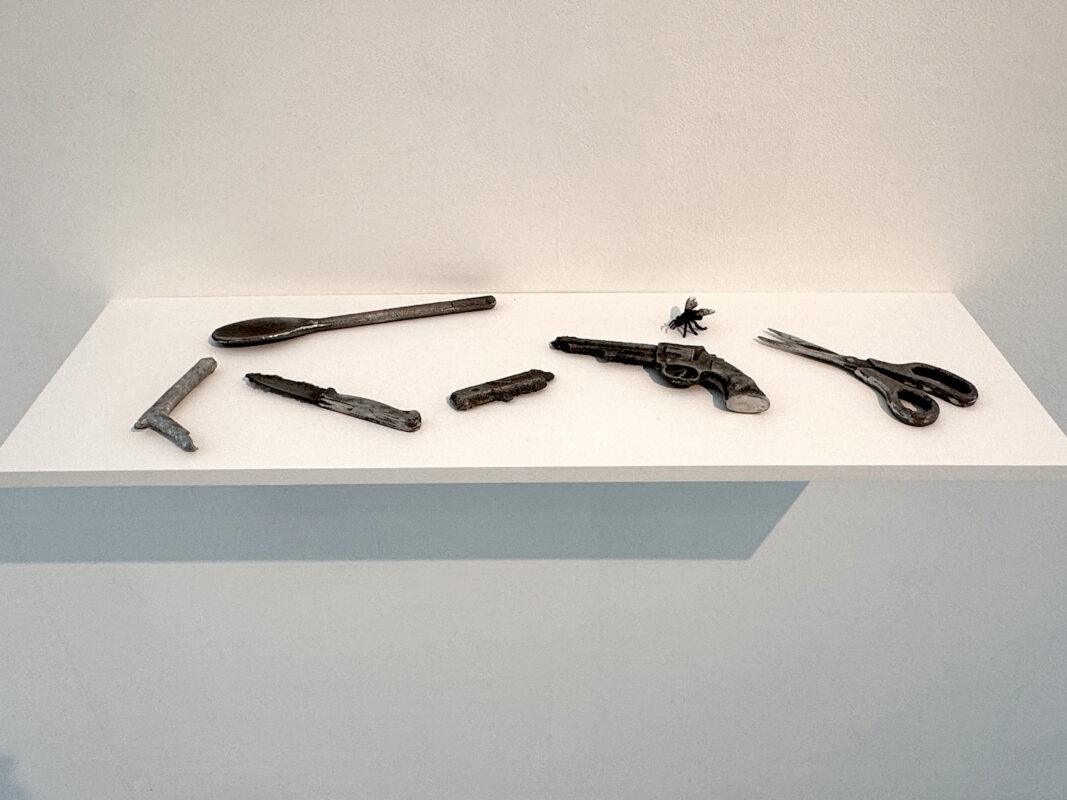
Lucy Mulholland’s sculptural practice explores ecological precarity, interspecies entanglement, and the ethics of care through labour-intensive processes like mould-making, slipcasting, and metal casting. She works primarily with clay, metal, and paper, investigating how these raw materials are transformed through process. Humour and play are key strategies in her work — ways of navigating the emotional complexity of living through ongoing crisis. Her recent work examines how small, seemingly futile gestures can take on new meaning when viewed through the lens of climate anxiety and collective denial. Referencing metaphor, idiom, and absurdity, Mulholland’s sculptures reflect on the tensions between inaction and responsibility. Through this material and conceptual investigation, her practice continues to explore how care, humour, and failure might open up space for speculative and more hopeful futures.
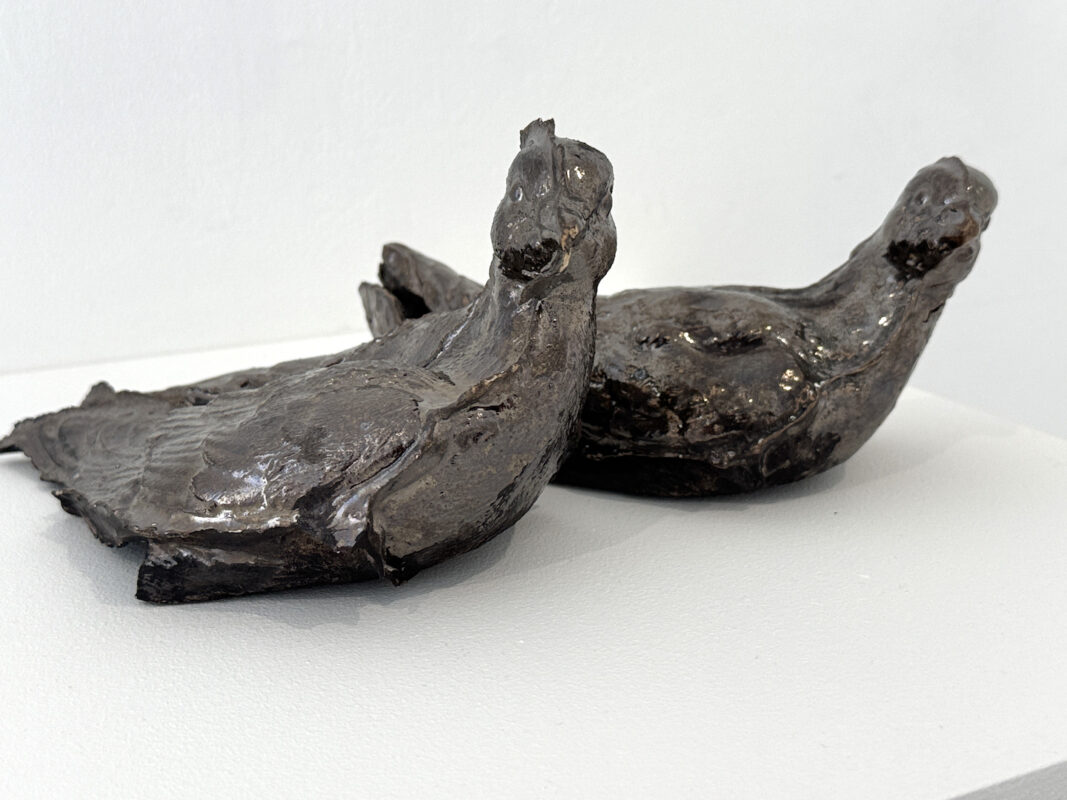
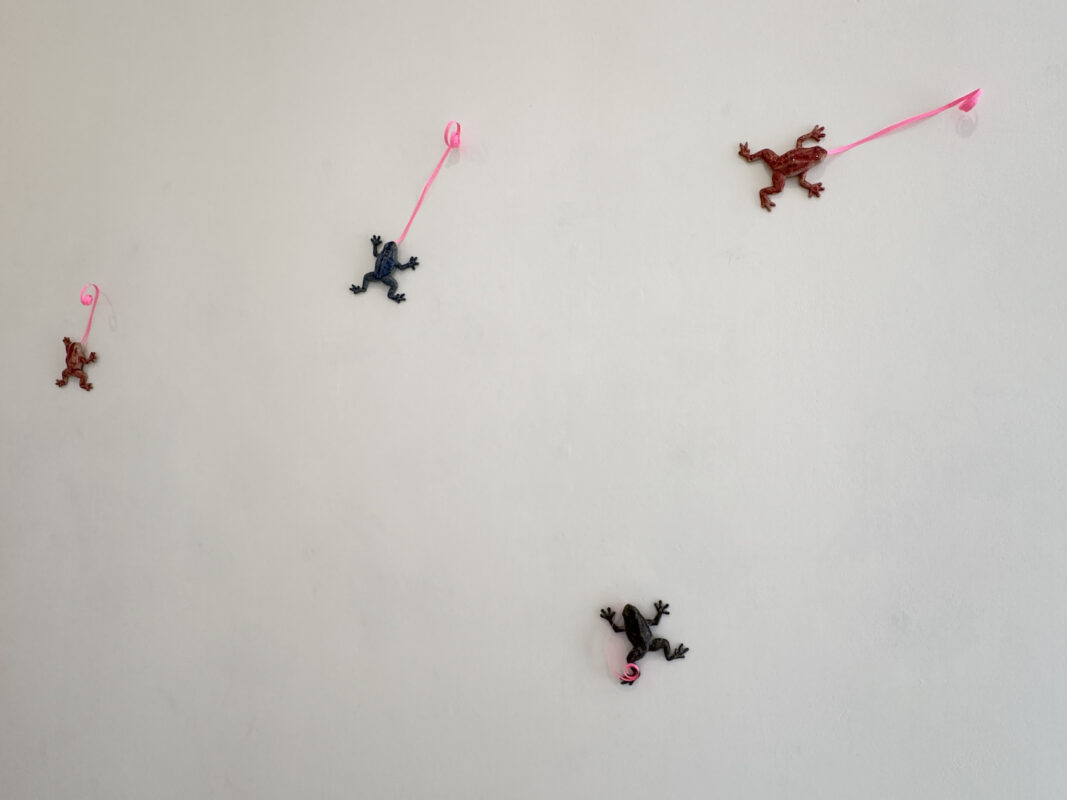
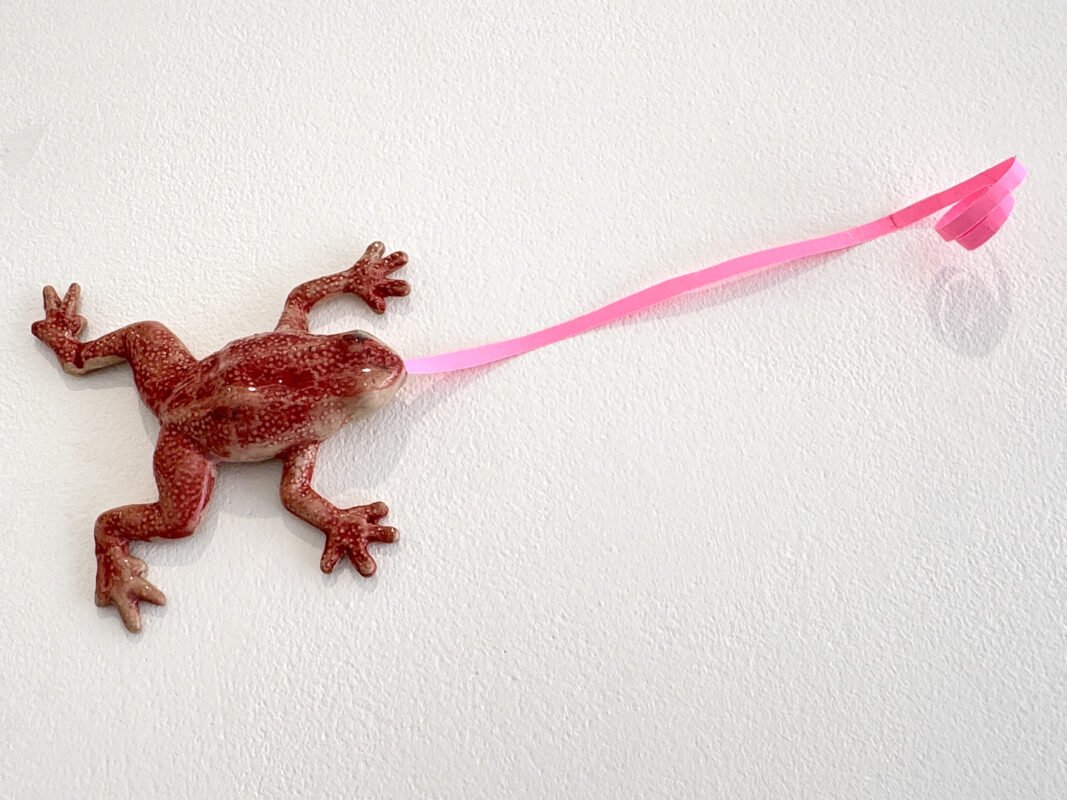
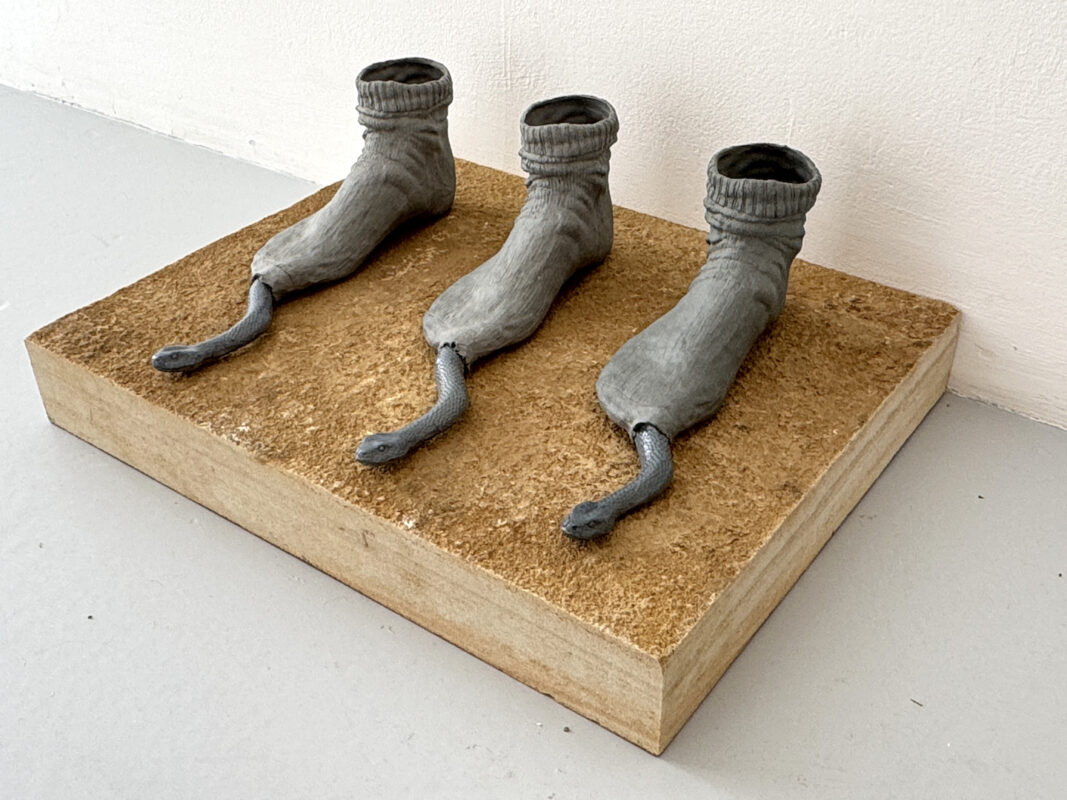
During her Technical Development Residency at Leitrim Sculpture Centre in September 2024, Lucy Mulholland expanded her material knowledge through intensive experimentation with plaster mould-making, slipcasting, and metal casting. Her sculptural practice engages with a range of raw materials — including clay, metal, wood, and paper — and centres on how these are transformed through labour and process. Lucy’s work investigates interspecies entanglement, the ethics of care, and ecological precarity, often incorporating humour and play to navigate the complexities of a changing world. The works presented in Working Title I continue these themes while positioning material process as a form of critical inquiry. Both sculptures explore how gestures that might appear insignificant or futile can become charged with meaning in the context of environmental crisis. Through reference to metaphor and idiom, she highlights the tensions between agency, absurdity, and the impulse to act.
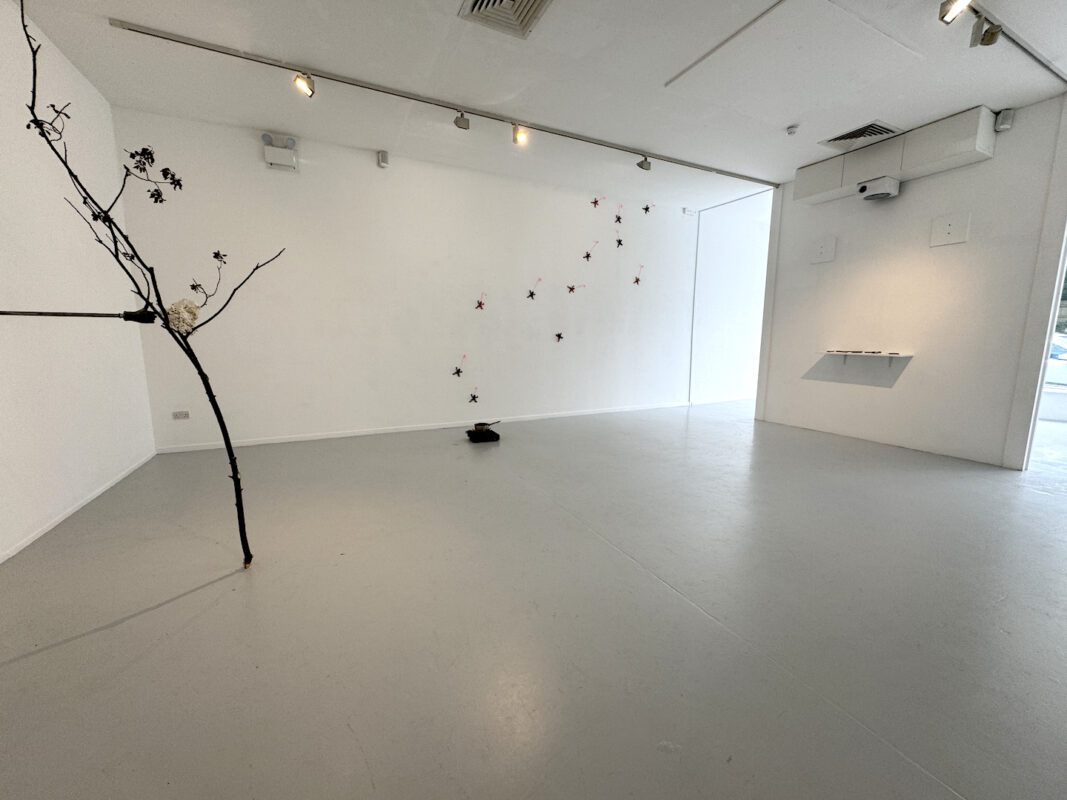
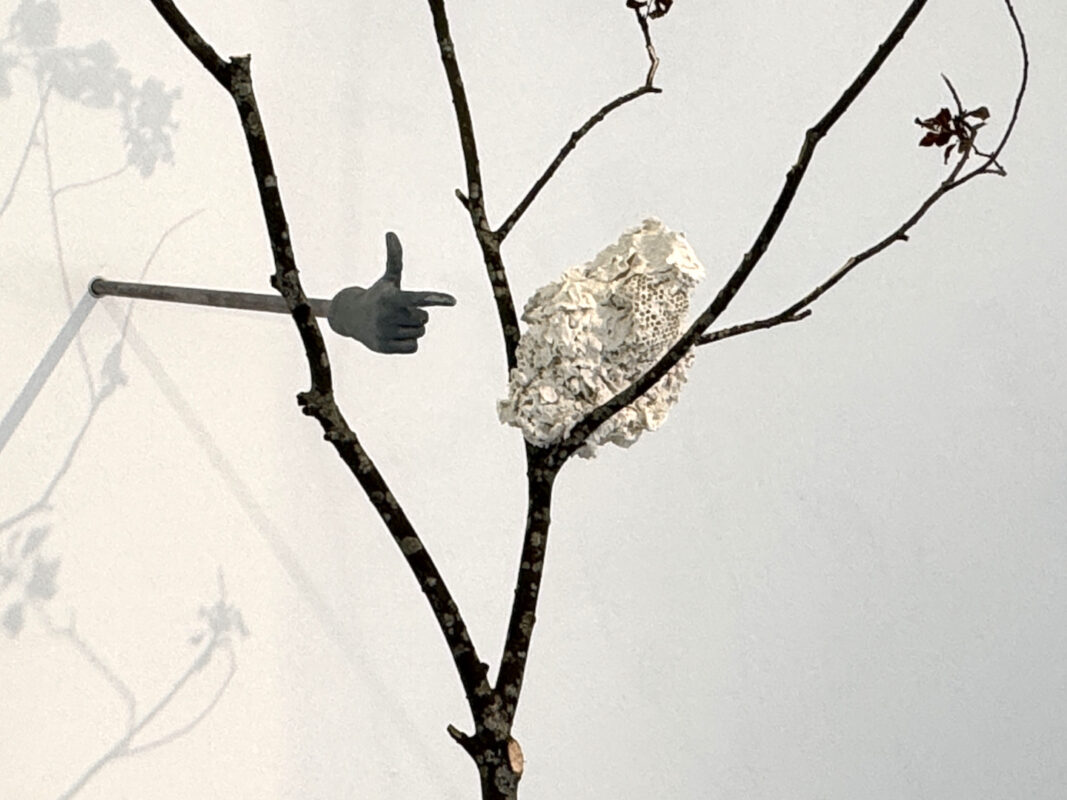
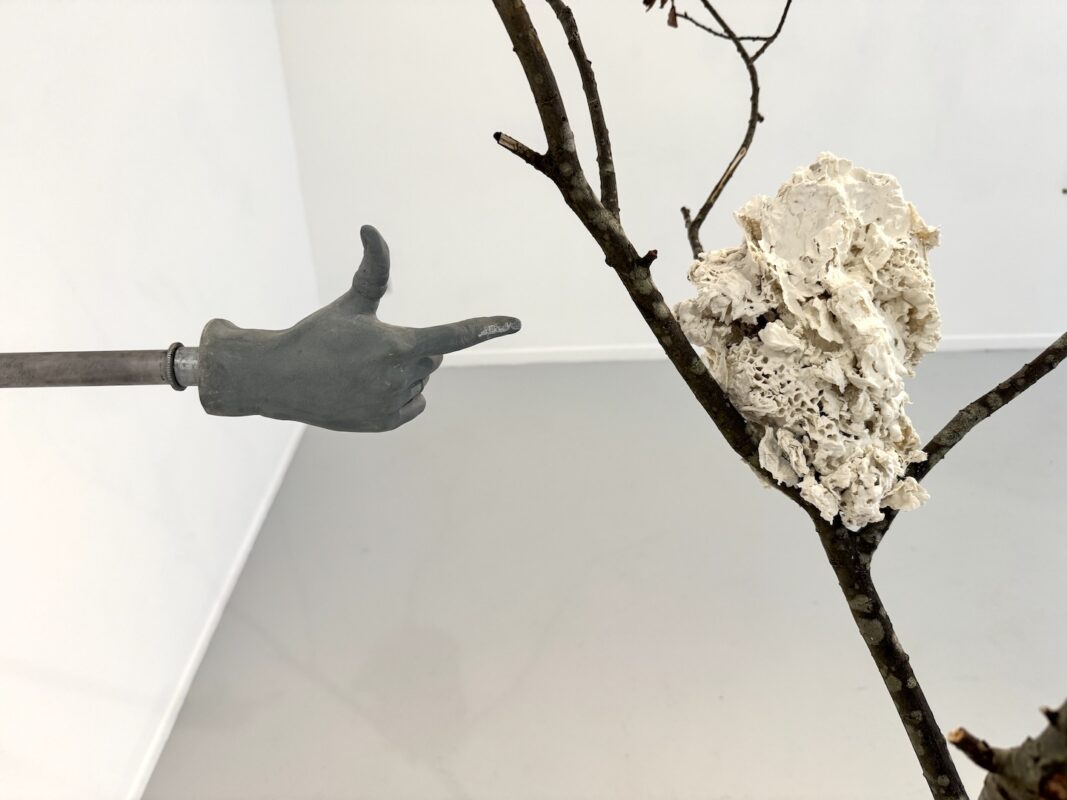
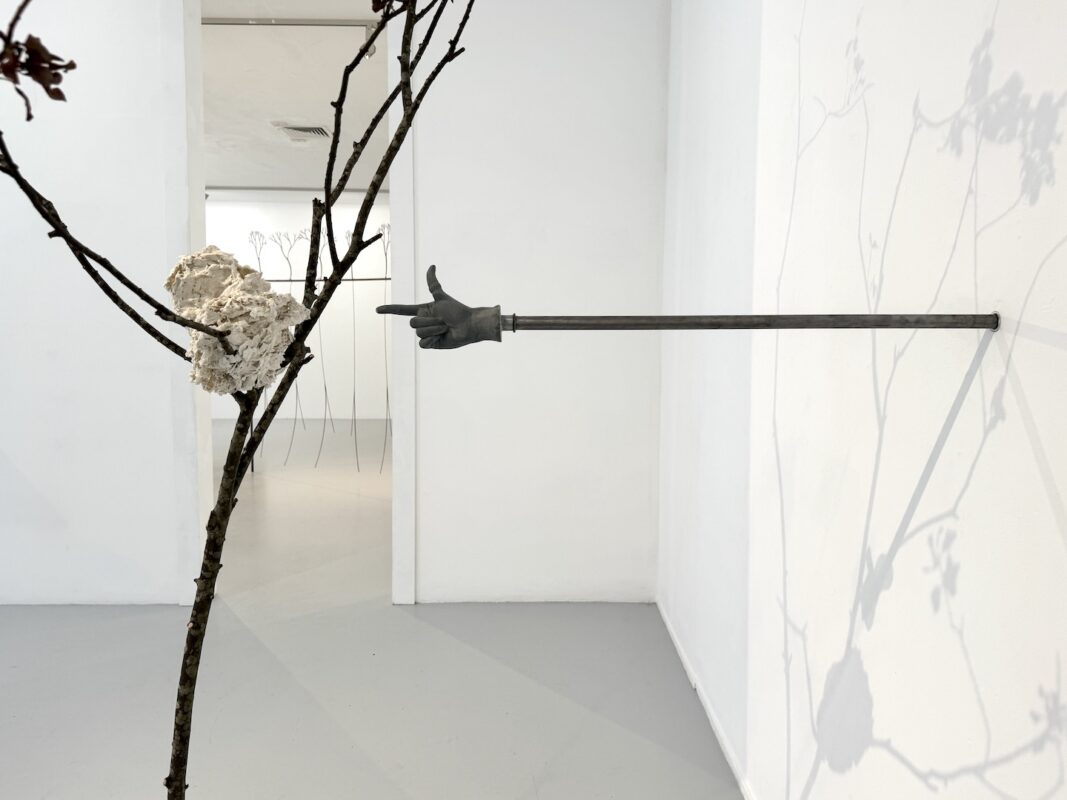
Frog in a Pot (2025) draws on the well-known metaphor of a frog remaining unaware in gradually boiling water. Constructed from slipcast stained ceramic, the frogs balance dark playfulness with a commentary on inertia and collective denial in the face of catastrophe. Am I Causing a Commotion? (2025) comprises a suspended ceramic hornet’s nest and a motorised fabricated arm bearing a slipcast ceramic hand. The hand gently and repeatedly taps the nest — a gesture that is at once naive, provocative, and absurd. Together, these works continue her inquiry into the role of humour, failure, and care in imagining alternative futures.
Lucy Mulholland is an artist based in Belfast. She holds a First-Class Honours degree in Sculpture from Edinburgh College of Art (2022) and was awarded the 2025 Gilbert Bayes Award by the Royal Society of Sculptors and the Meyer Oppenheim Prize at the 195th RSA Annual Exhibition. She has exhibited across Ireland and the UK, including Hidden Door Arts Festival (Edinburgh), AWAKEN (Artlink, Buncrana), Materials, Messages and Meanings (R-Space, Lisburn), and They Had Four Years (GENERATORprojects, Dundee). Residencies include the Bothy Project and the Tyrone Guthrie Centre. In 2025, she received SIAP funding from the Arts Council of Northern Ireland.
Blaine O'Donnell
For Matters of Process, Blaine O'Donnell has developed new work investigating the sculptural potential of electro mineral accretion processes.
neamhábhartha, a3. 1. Immaterial, incorporeal. 2. Immaterial, irrelevant.
In the work neamhábhartha (2025) a wire armature forms the Irish word in handwritten script, suspended in a tank of water enriched with powdered limestone, a by-product of the LSC stone carving workshop. An electric current flowing through the water causes layers of dissolved limestone to build up on the wire word, allowing material agency and chance to shape the form of the work. The process is powered by a solar cell - the level of accumulation depends on the duration and strength of sunlight reaching the solar cell, tying the work's formation to site-specific conditions.
nithiúil, a2. Real, concrete, corporeal.
In the work nithiúil (2025), the Irish word is inscribed by hand into a thin layer of limestone dust on the gallery window. This limestone formed approximately 350 million years ago during the Lower Carboniferous period. In contrast to neamhábhartha (2025), the word is made present by its material absence, contrasting the fundamental sculptural processes of material subtraction and addition.
O'Donnell explores the art object as a site for the meeting of disparate things – Carboniferous period limestone, metals, electricity, water, solar energy, and the Irish language - tracing points of separation and connection between the material and incorporeal, presence and absence, artwork and place.
Blaine O’Donnell is an artist working primarily in sculpture. O'Donnell received the 2019 Emerging Irish Artist Residency Award at the Burren College of Art, followed by the exhibitions CAOL ÁIT, BCA, Clare (2019) and CAOL ÁIT Cuid a Dó, 126 Gallery, Galway (2020). Recent exhibitions include hinder/further,The Complex, Dublin (2022), and TWO PHOTOGRAPHS AWAY, Ardgillan Gallery, Balbriggan (2024). Residencies include the Temple Bar Gallery+Studios / HIAP Residency Exchange (2023), the Helene Wurlitzer Foundation of New Mexico (2024), and Fire Station Artists' Studios, Dublin (2024/5). Awards include the EMERGENCE Award, Wexford Arts Centre (2024) and the Paul Robinson Award, TBG+S (2025)
website www.blaineodonnell.com
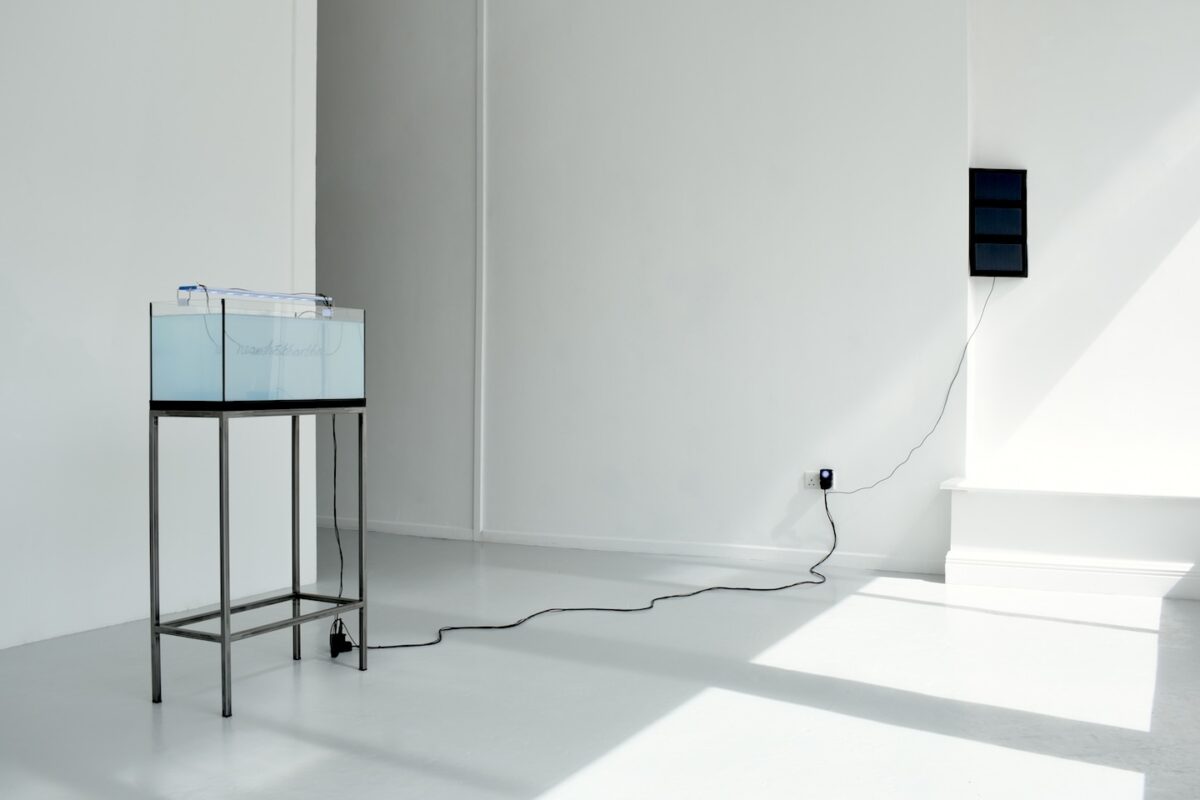
Glass aquarium, LED light, mild steel, clear spray paint, plastic table feet, galvanised steel wire, silicone, rubber, copper, limestone dust from stone carving workshop at Leitrim Sculpture Centre, tap water from LSC, USB connector, 3-core wire, 2-core wire, adaptor, timer, plug, socket, black spray paint, vinegar, 5V photovoltaic cell, cable ties, electrical tape, lead-free solder.(photo: Blaine O'Donnell)

Glass aquarium, LED light, mild steel, clear spray paint, plastic table feet, galvanised steel wire, silicone, rubber, copper, tap water from LSC, USB connector, 3-core wire, 2-core wire, adaptor, timer, plug, socket, black spray paint, vinegar, 5V photovoltaic cell, cable ties, electrical tape, lead-free solder.(photo: Blaine O'Donnell)
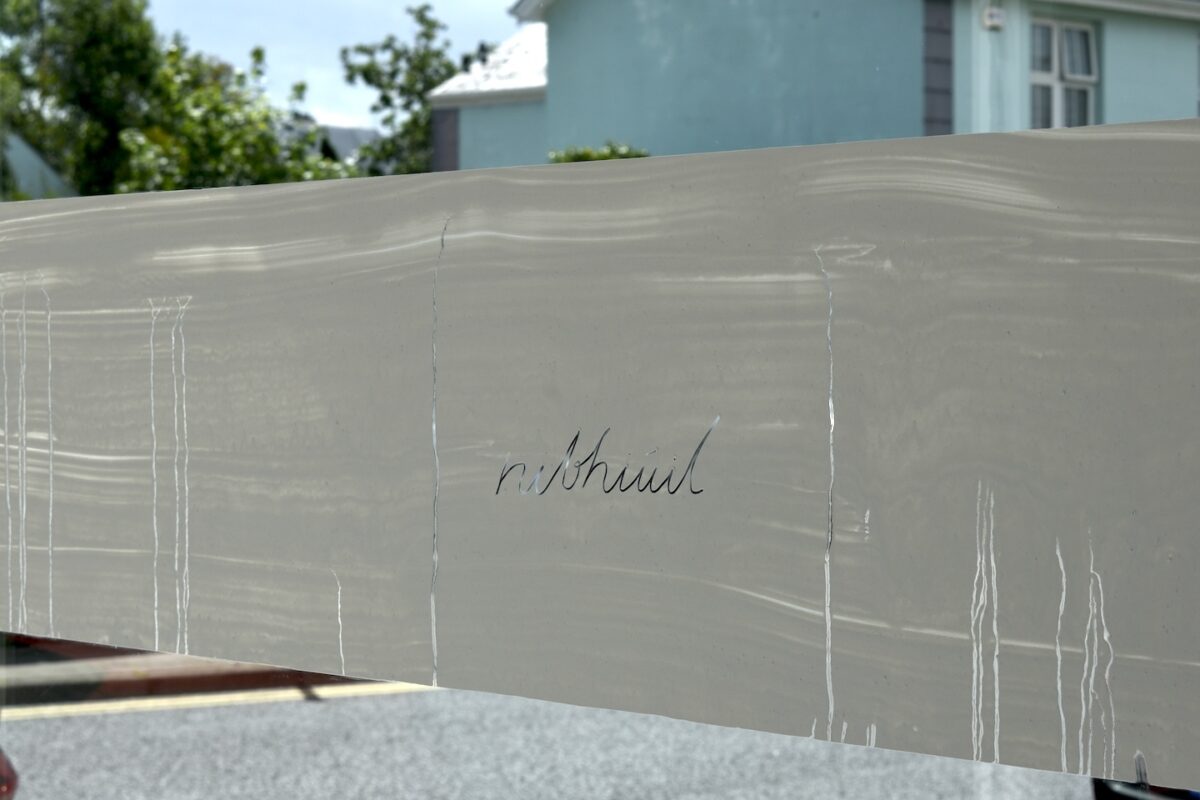
Limestone dust from stone carving workshop at Leitrim Sculpture Centre, window glass. (photo: Blaine O'Donnell)
Kate Oram
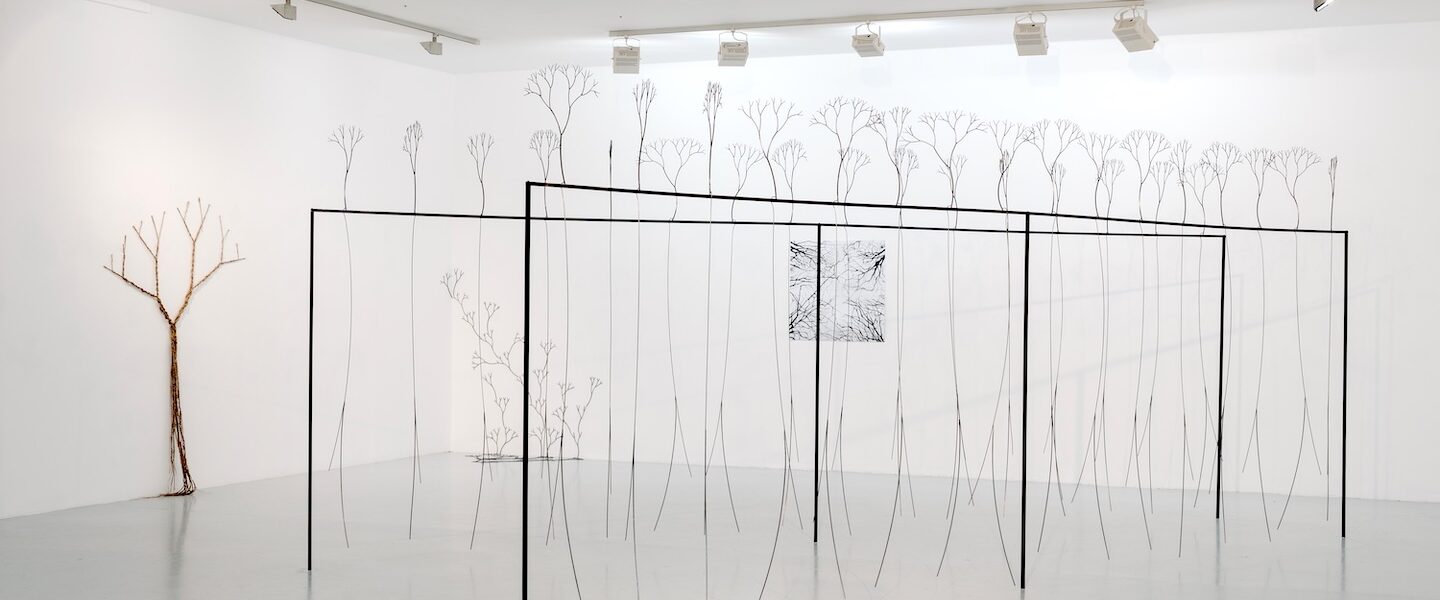
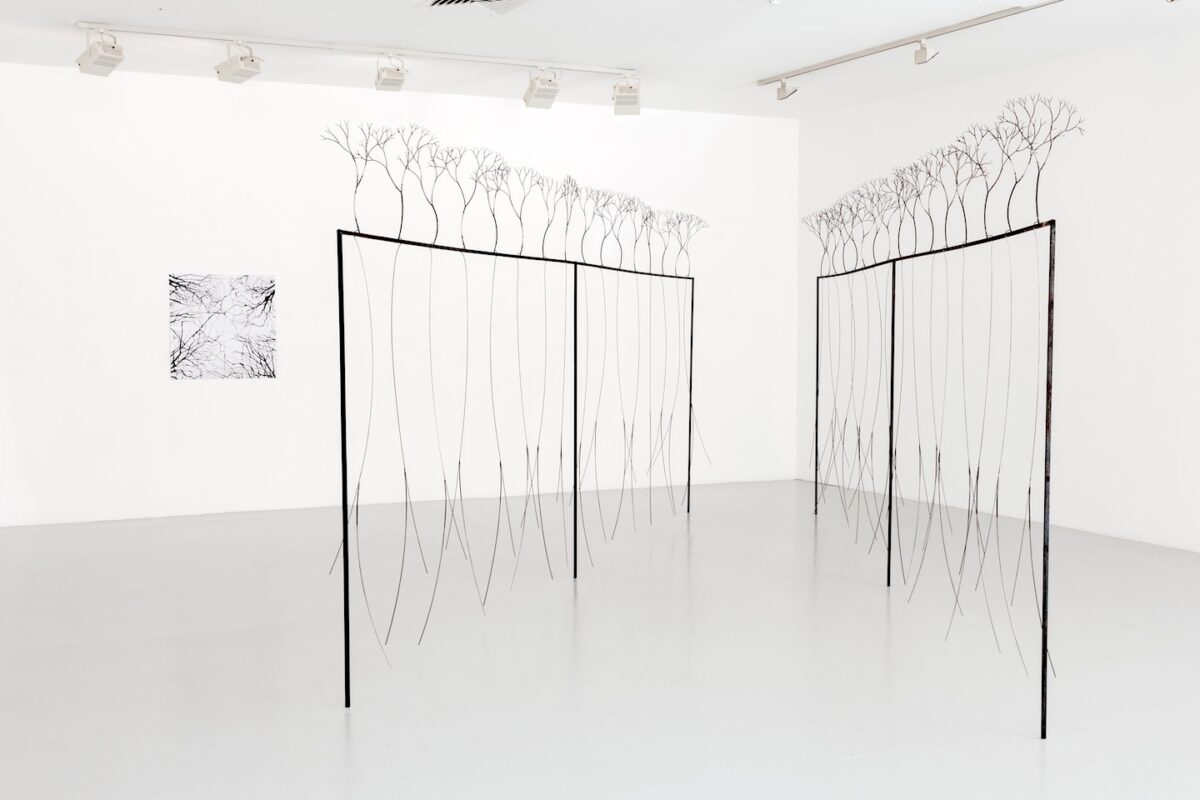
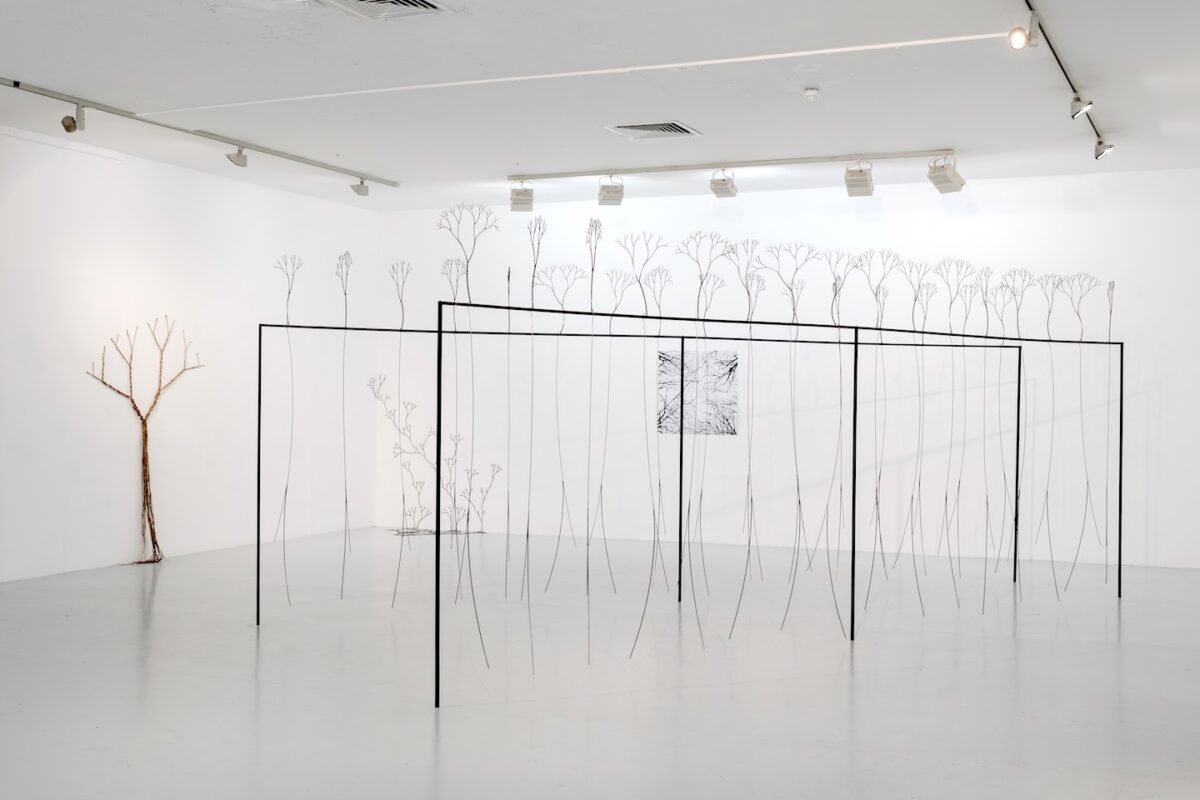
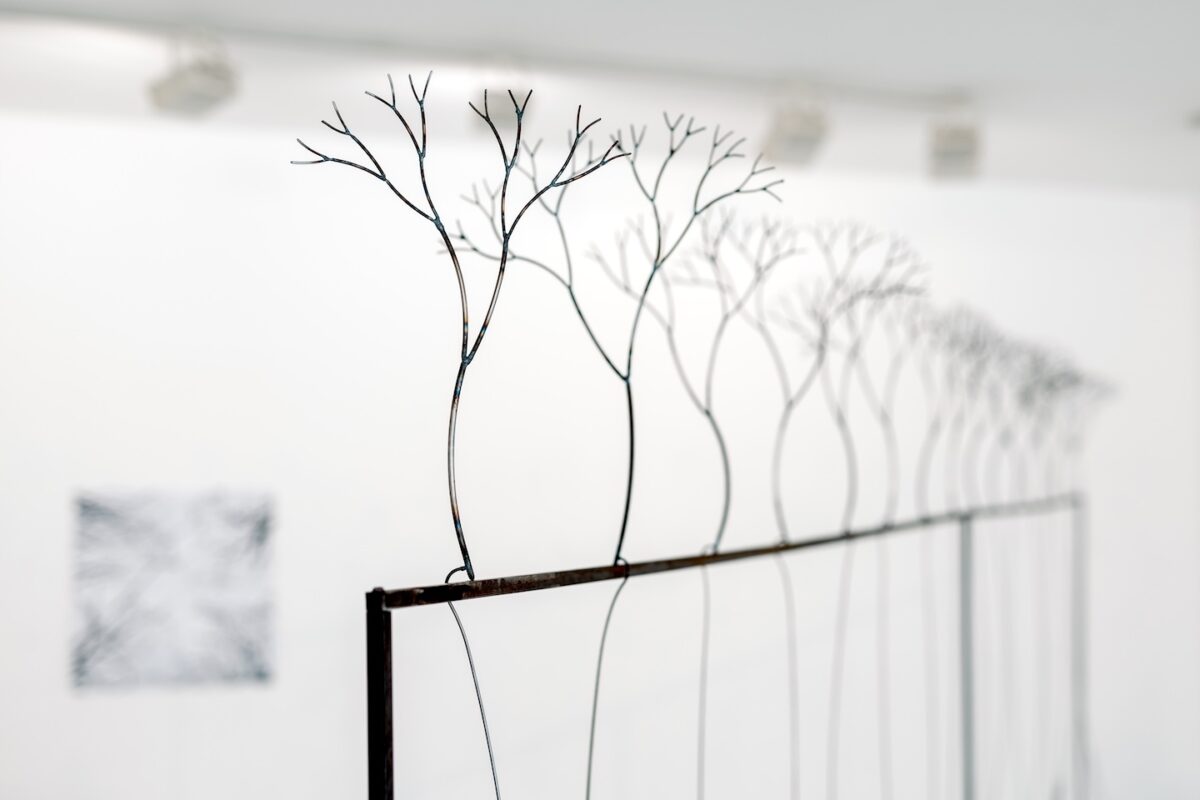
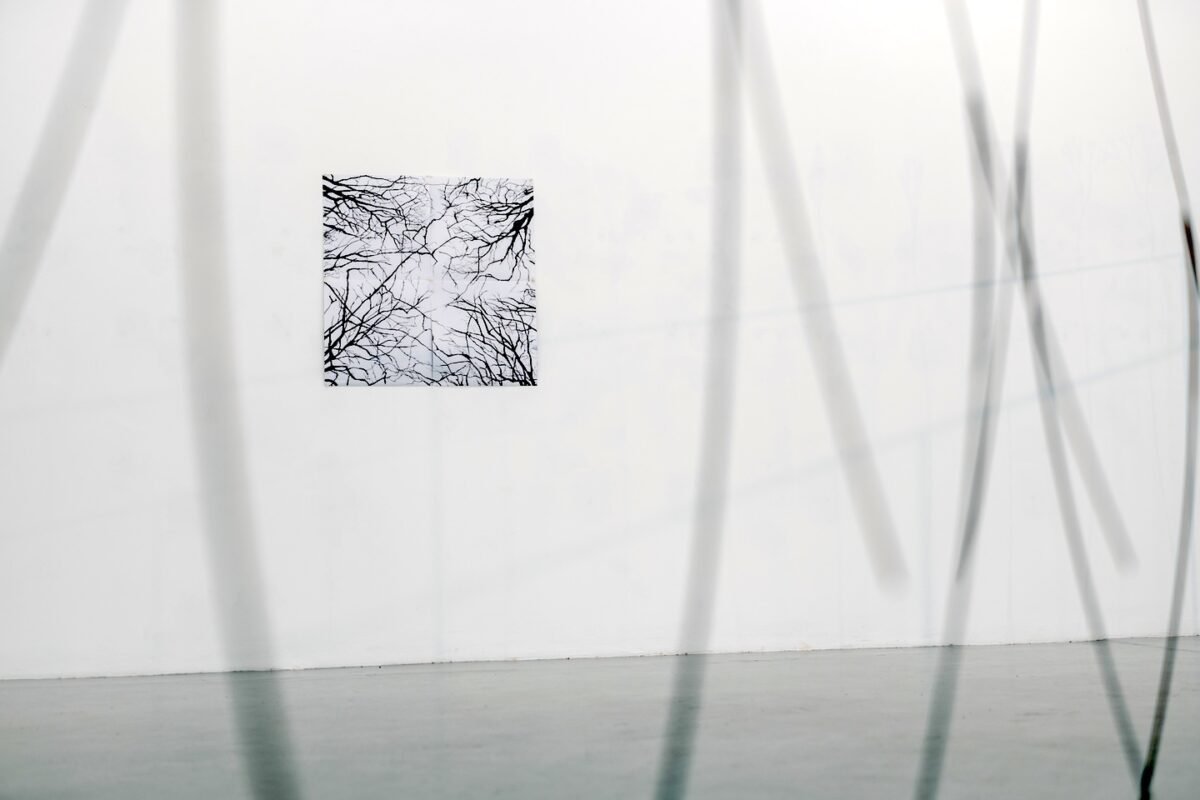
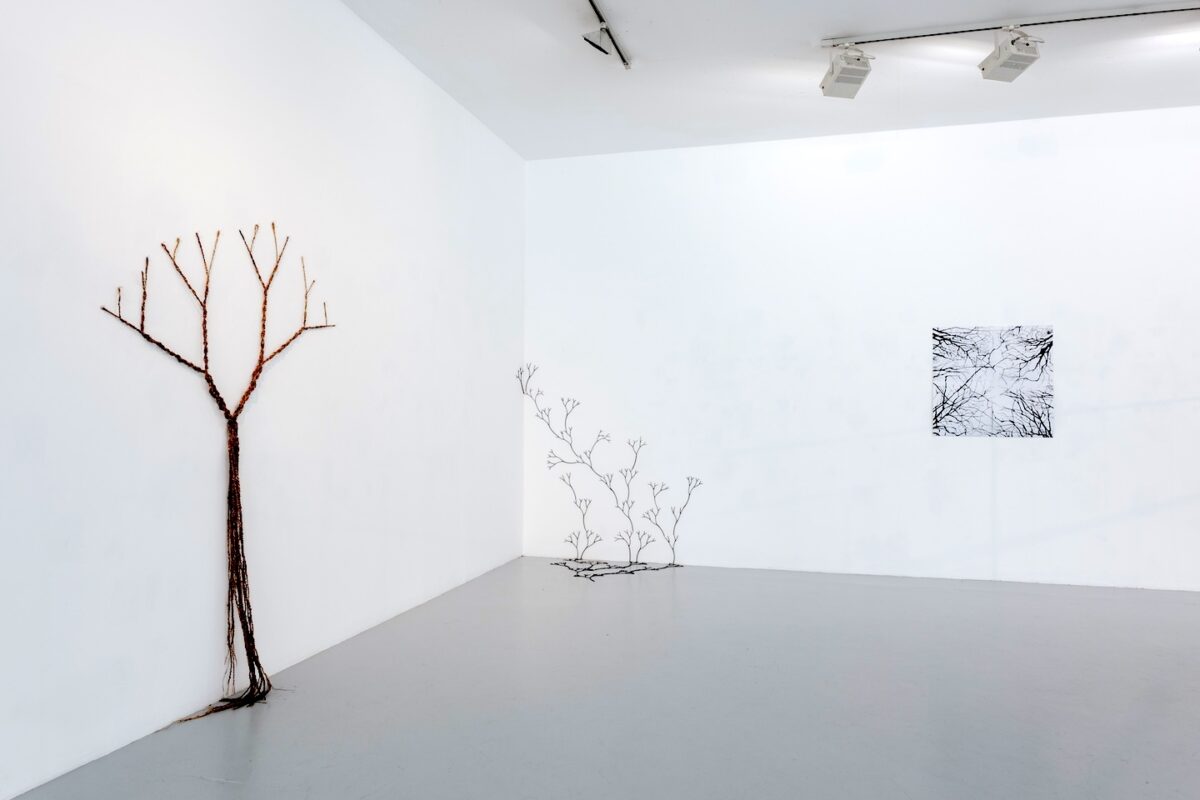
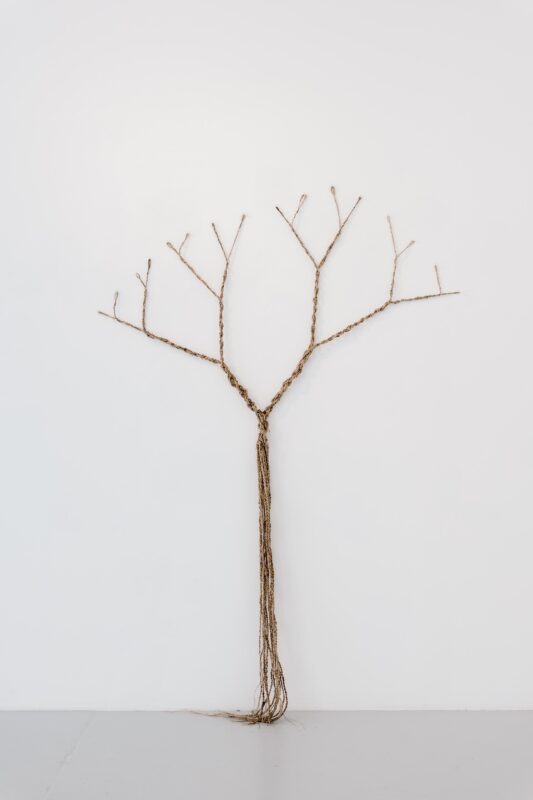
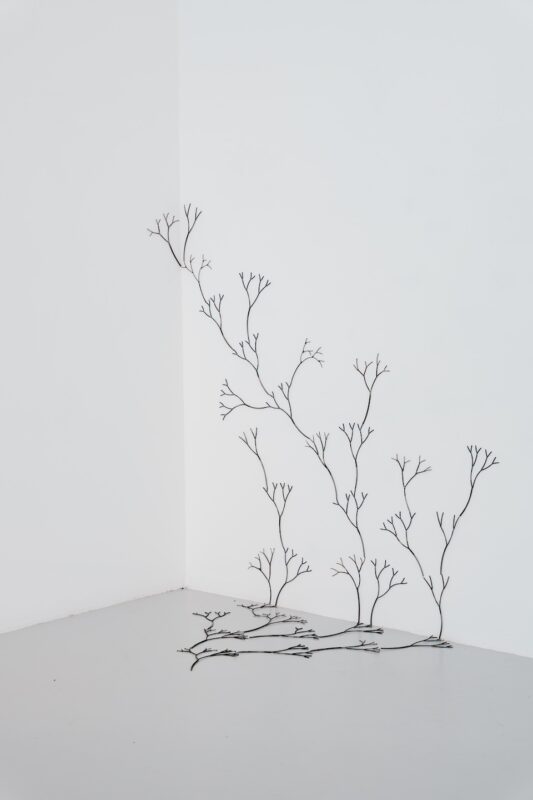
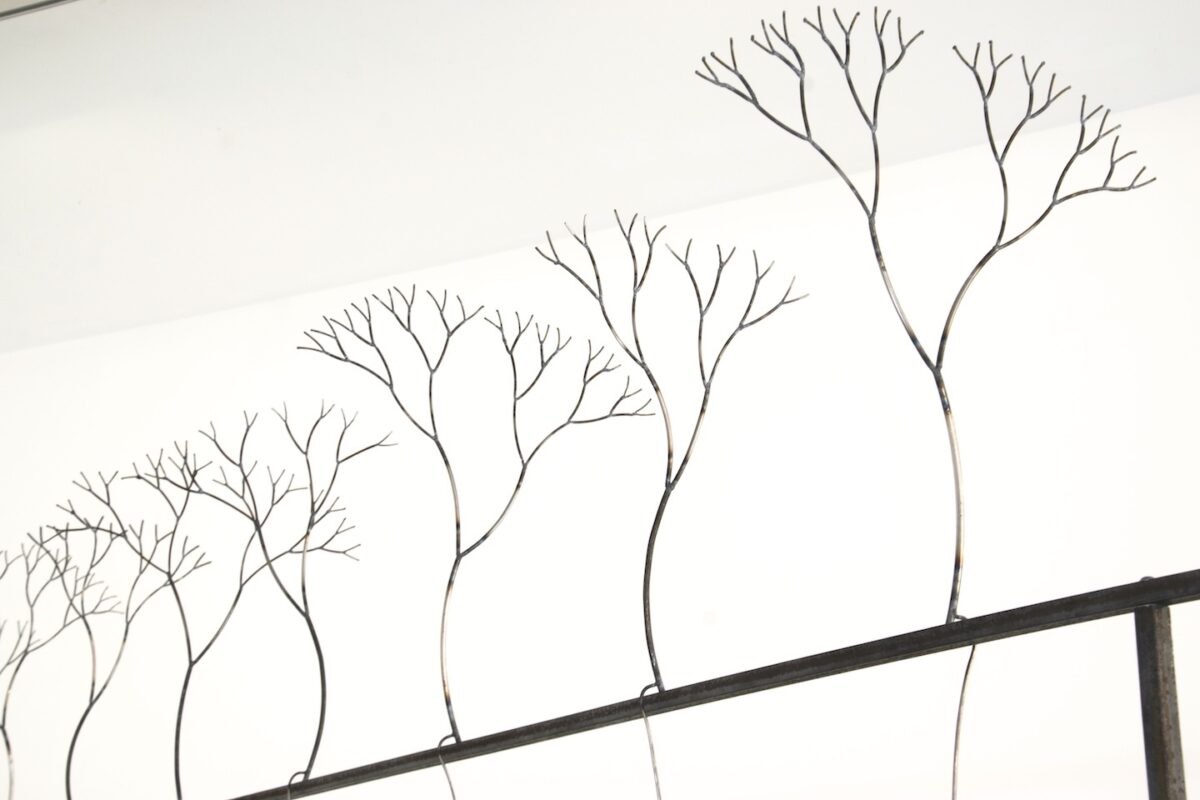
During the four‑week Technical Development Residency, I engaged in an intensive welding practice in which I explored the disciplined repetition of welding to create fractal-inspired branching steel forms, resembling the self-similar, repeating patterns of tree growth. These sculptures are rooted in an investigation of recursive geometry—mirroring the natural logic of tree growth and limb structures—translated through sculptural materials and technical processes.
In this display, the collected works draw on both the visual logic of fractal patterns in nature and the quiet presence of forest structures. This body of work sits within a broader inquiry into the wellness potential of nature-based art. My wider practice includes forest bathing facilitation, ephemeral nature art, and sensory participation in woodland environments—most recently through the SPARK residency at Drumhierny Woodland Hideaway. Through these experiences, I’ve come to view trees not just as subject or symbol, but as collaborators in a process of artistic and psychological restoration.
Where forest bathing invites us to feel the forest from within, these steel forms propose an adjacent mode of attention: the possibility that observing art inspired by nature—particularly its rhythmic, fractal forms—might bring about a similar state of calm or reflective wellness. The works aim to translate natural growth systems into durable, tactile forms that hold space for quiet observation and bodily resonance.
In this way, my welded sculptures are both outcome and experiment: material studies of pattern and repetition, and conceptual testaments to the subtle yet powerful effects that nature—and art about nature—can have on our nervous systems, imaginations, and sense of connection.
Kate Oram is a sculptor and ecological artist working with bronze, stone, and nature-based processes. Gaining a BA in Wood, Metal, Ceramics and Plastics at Brighton Polytechnic in 1991, she completed an MA in Creative Practice at IT Sligo in 2021, deepening her engagement with the landscape and exploring more conceptual, environmentally focused approaches. Her practice is shaped by ongoing residencies at Drumhierny Woodland Hideaway and annual research residencies at the Tyrone Guthrie Centre, and currently integrates Forest Bathing and nature art in primary schools. Rooted in materiality and ecological connection, her work has been exhibited in Ireland and abroad, including Sculpture in Context, Dublin, and Bloodroot, Pulchri Studio, The Hague (2025). www.kateoram.com
Sonya Swarte
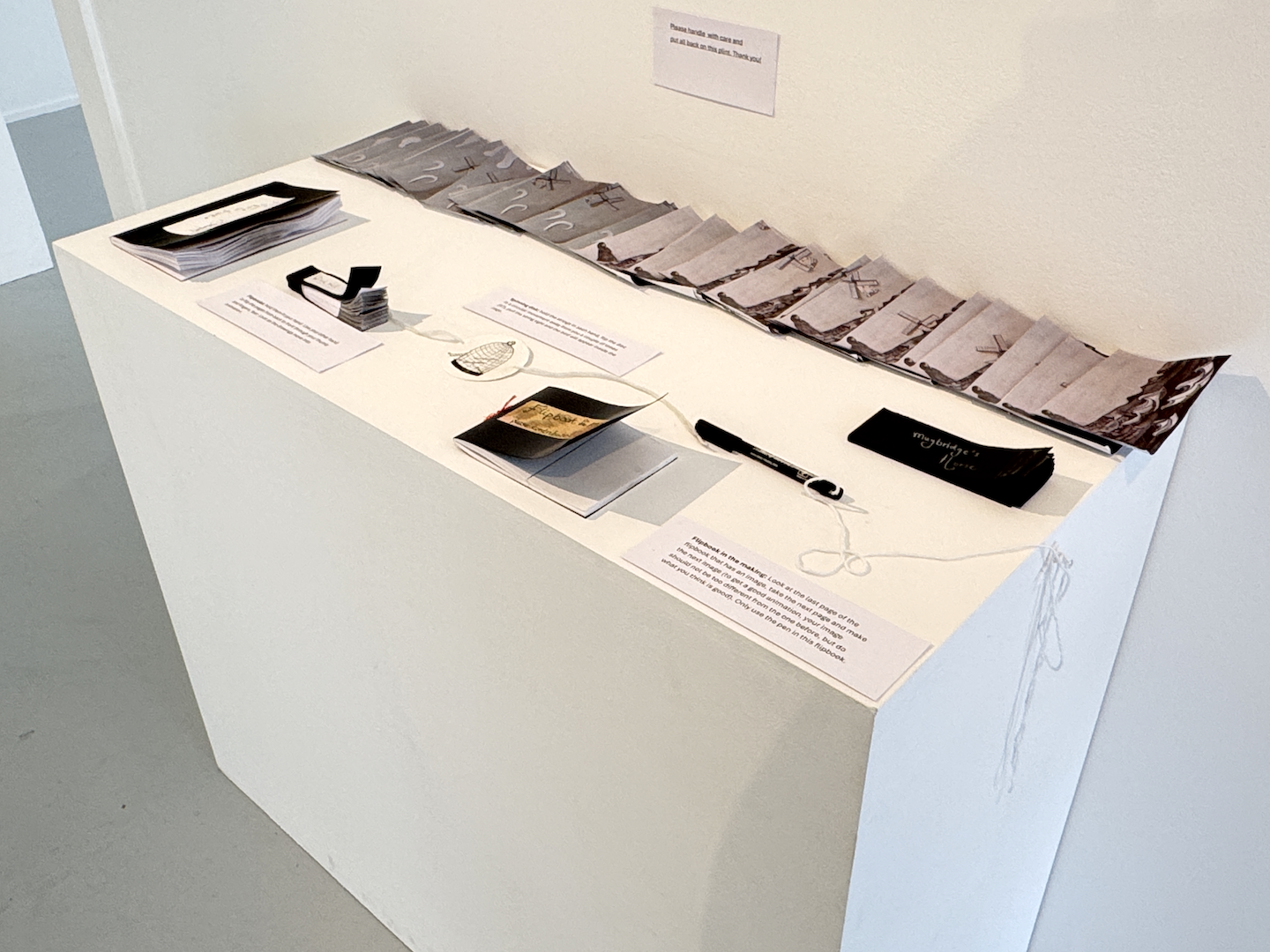
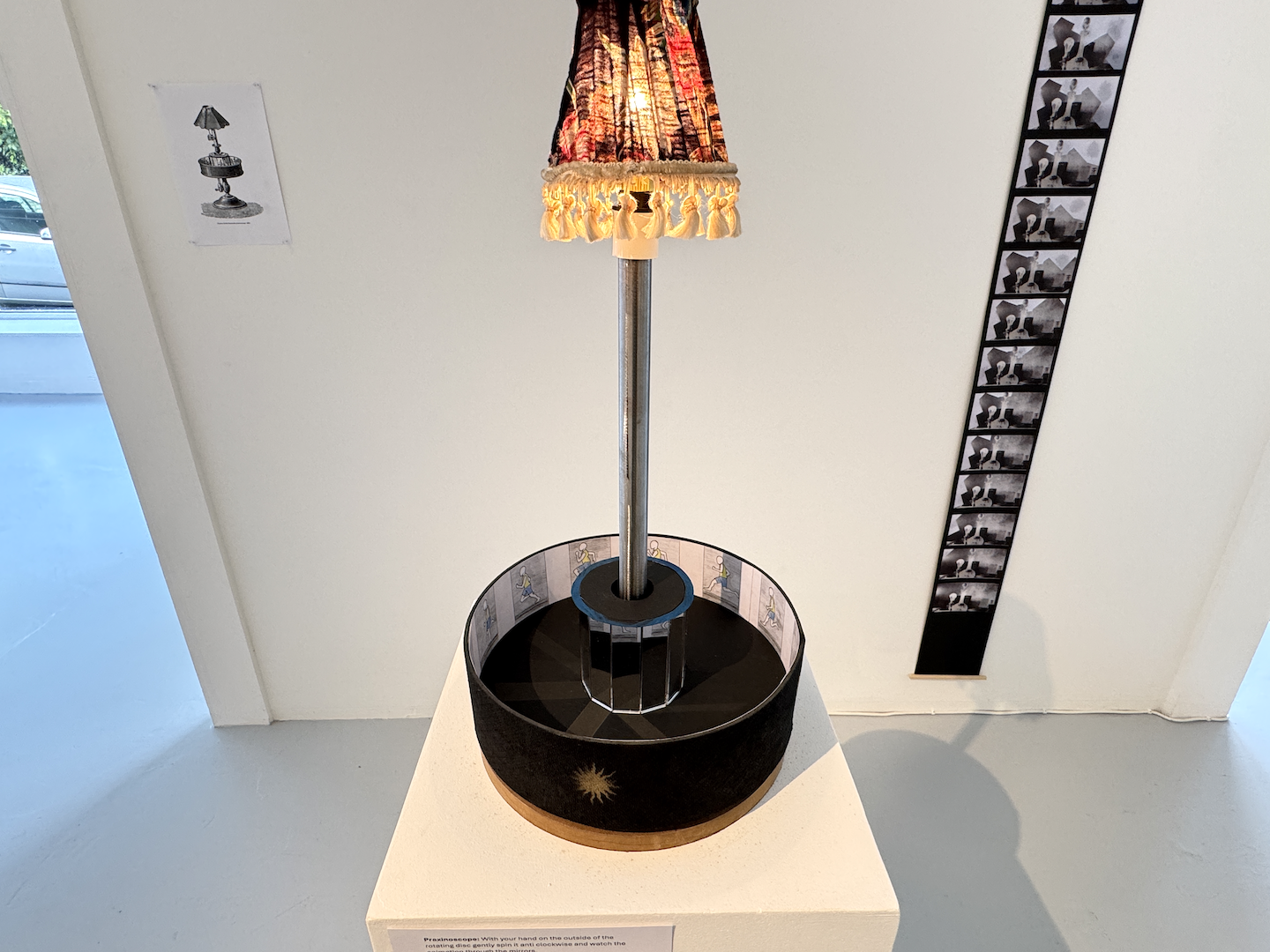
What happens when things meet and interact in some way? Material objects are parts of stories, through use, ownership, repair, and dismantling or repurposing. Constructing and reconstructing for our need for understanding and meaning.
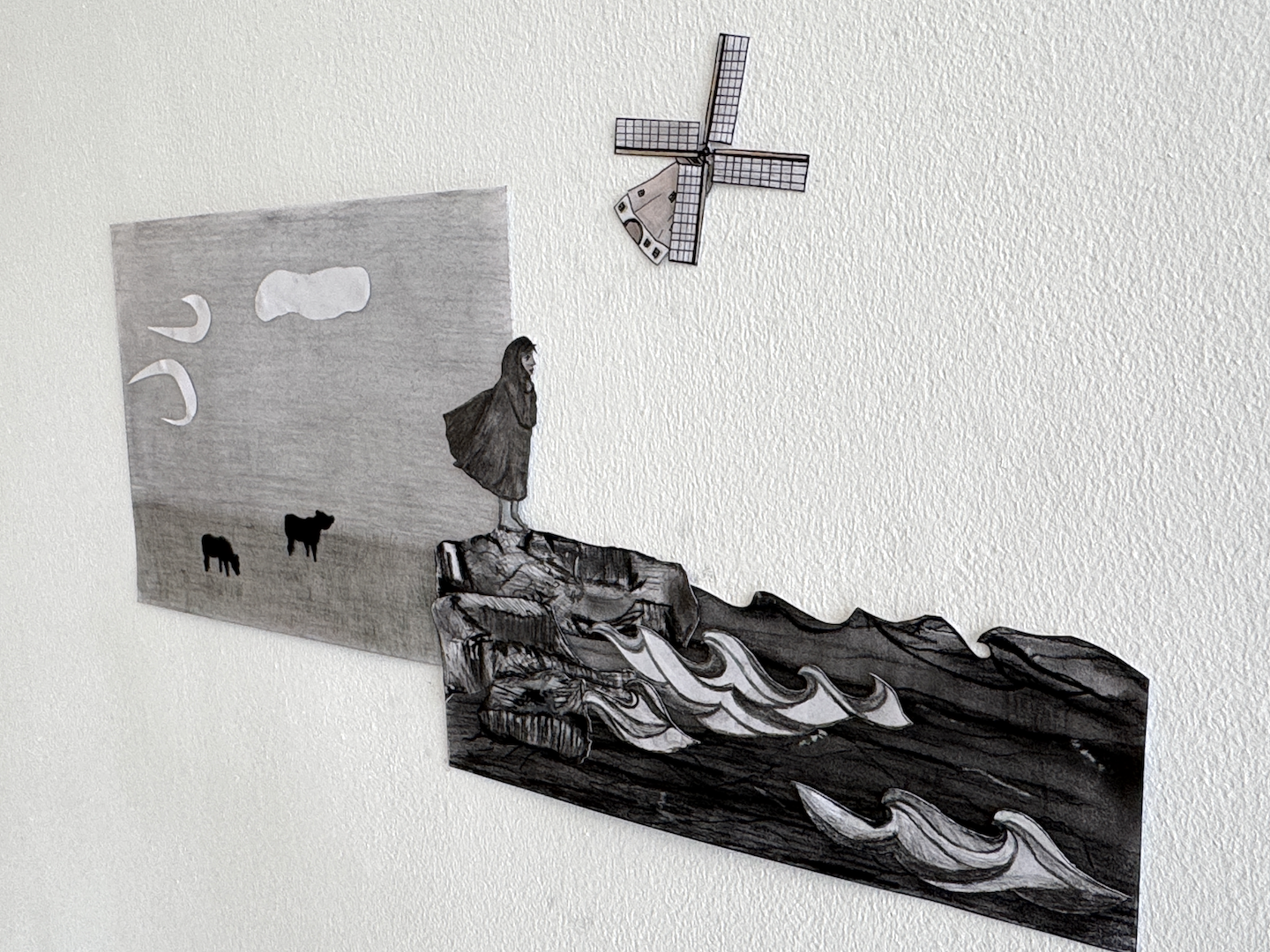
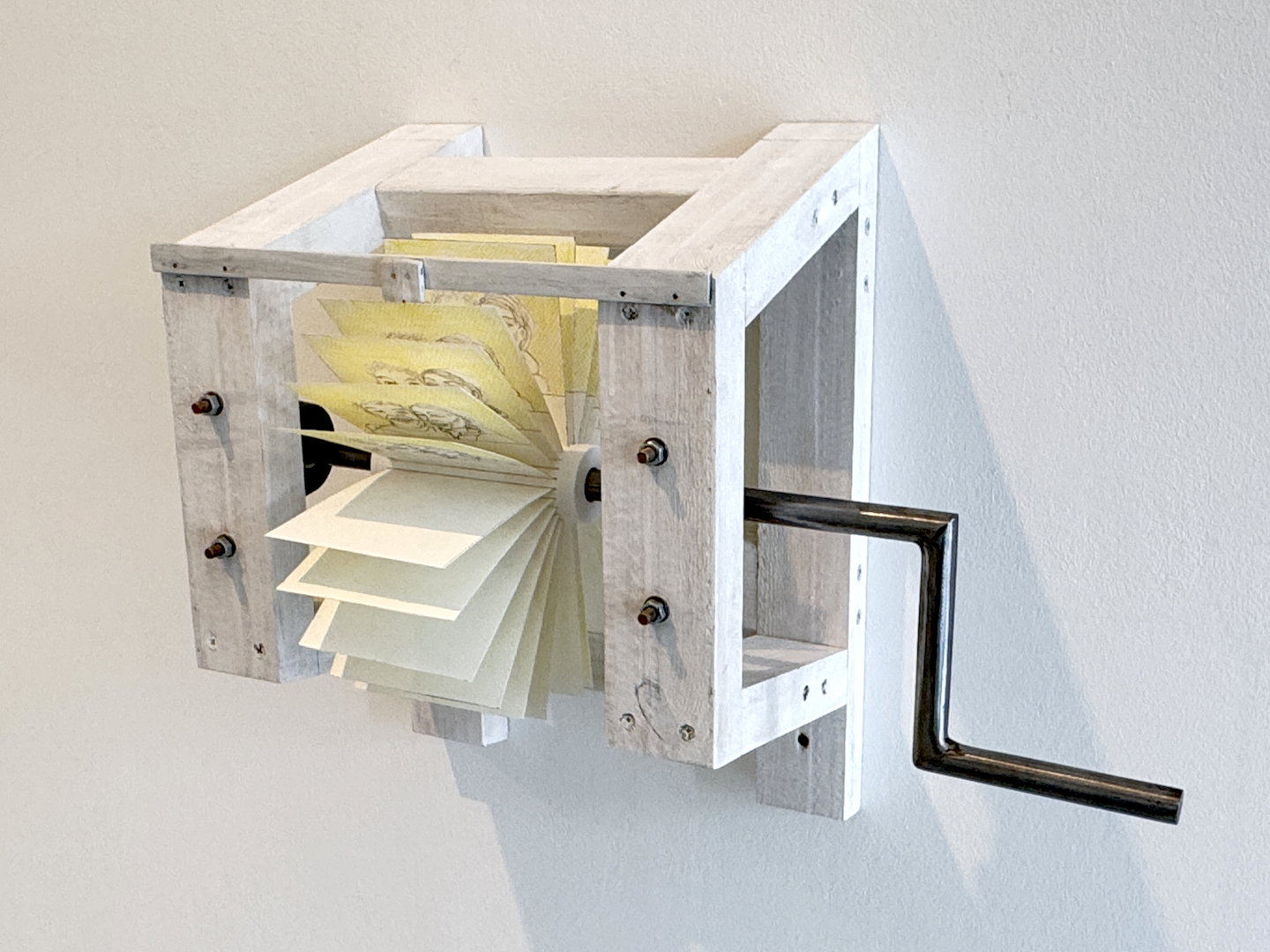
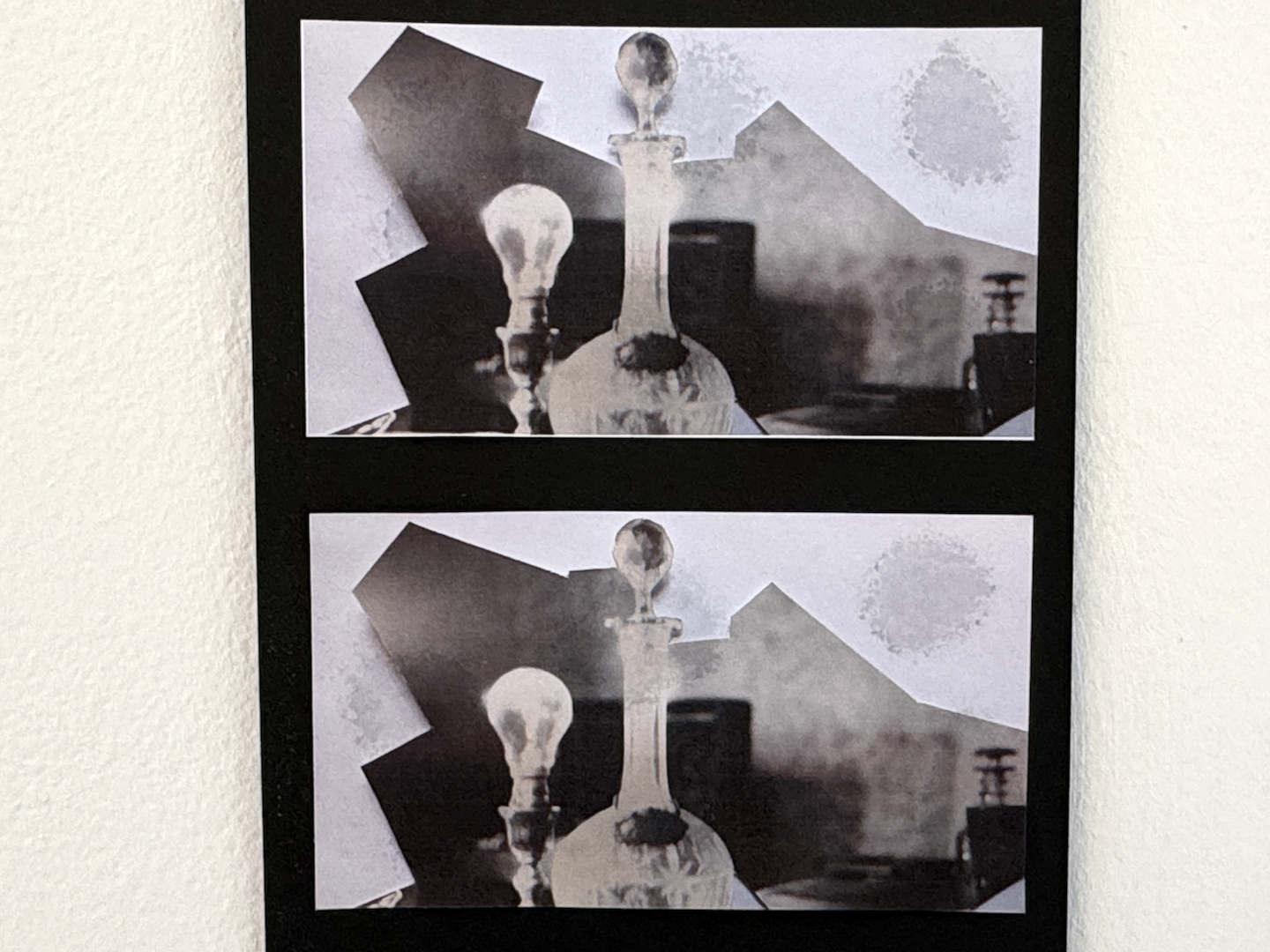
Reading Hauntology - ‘a range of ideas referring to the return or persistence of elements from the social or cultural past, as in the manner of a ghost' Mark Fischer. I shot and developed film (35mm and super 8) and printed stills, drawing, cut up photographs, made tiny animations, and got tangled up in the many possibilities. Karen Barad talks about diffraction: “an iterative (re)configuring of patterns of differentiating-entangling. There is no moving beyond, no leaving the ‘old’ behind. There is no absolute boundary between here-now and there-then. There is nothing that is new, there is nothing that is not new.”
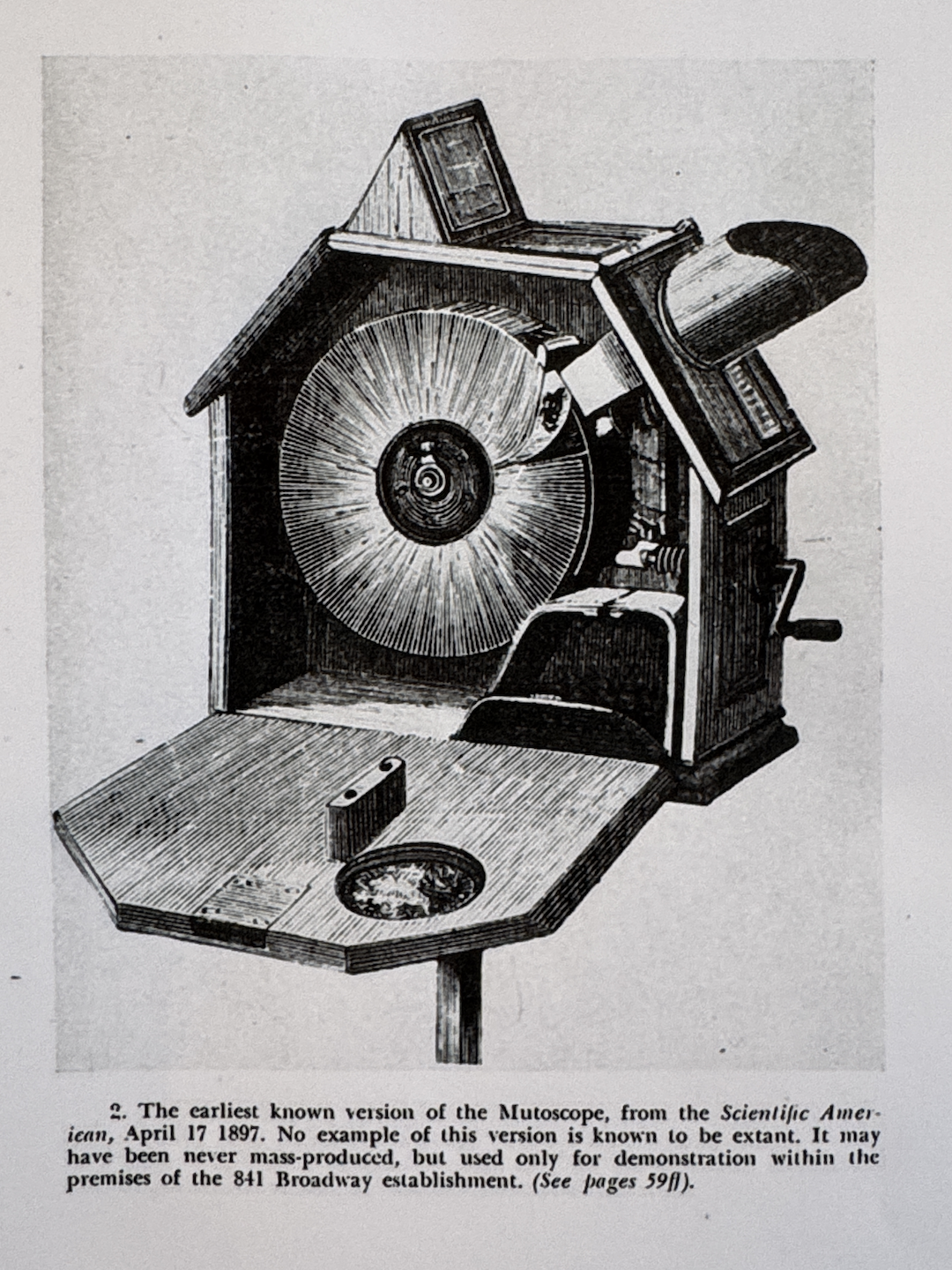
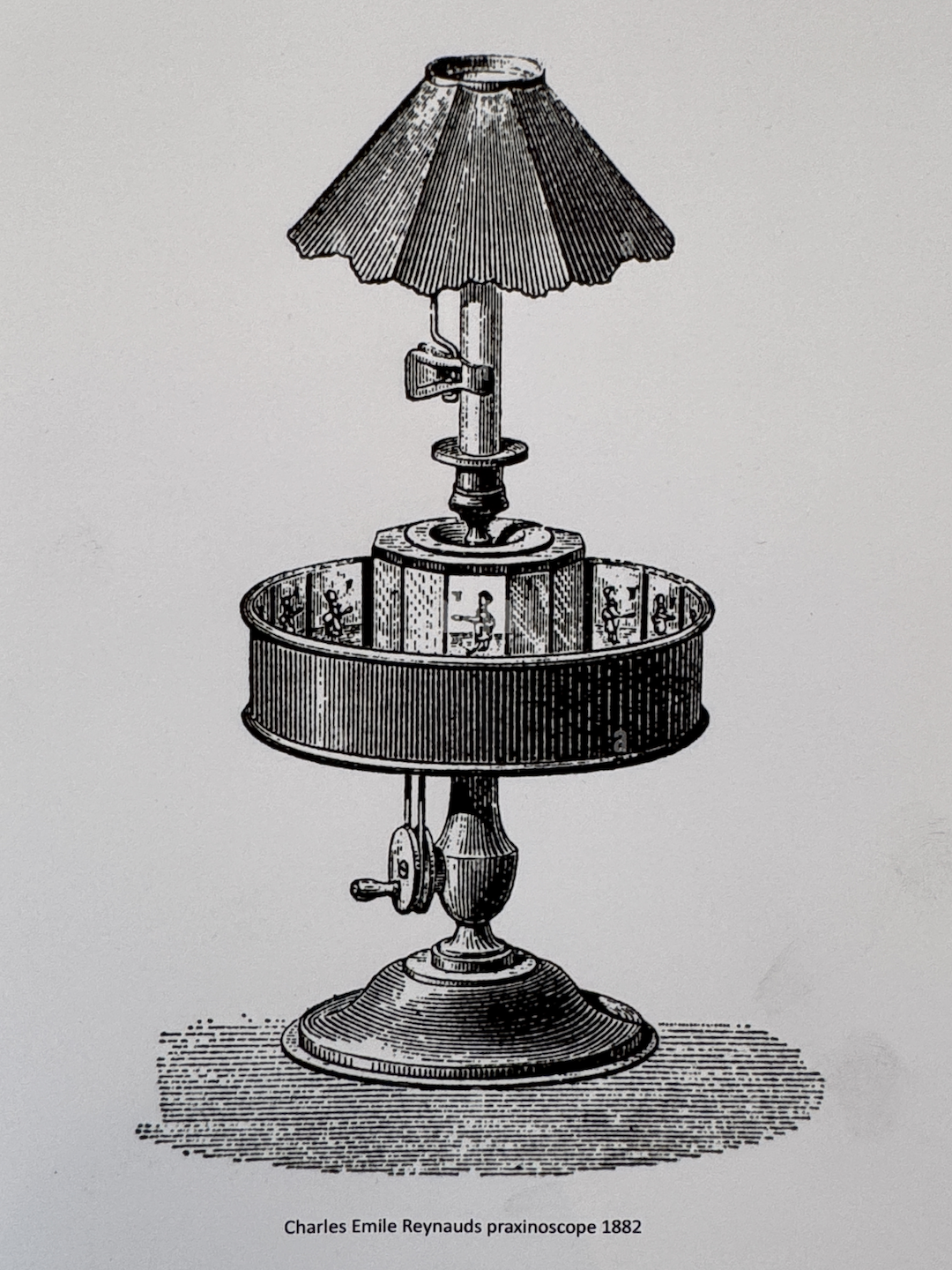
I have been thinking about the story of paper, animation, collage, photographs, paint, drawing. The optical illusion that animation is. The way the mechanics of the early machines are logical, tangible. Our mobile phone cameras share a story with these devices. And this story spreads out over space and time, encompassing all the people and events and places and so on that they were (are) part of, from cinema to selfies. Laura Mulvey says in relation to photography and cinema; “The trace of the past in the present is a document, or a fact, that is preserved in, but also bears witness to the elusive nature of reality and its representations.” (Death 24 x a Second). This is very relevant today.
Sonya Swarte grew up in The Netherlands where she acquired a BA in Archaeology in 2005 at Leiden University. In 2007 she came to Ireland and has since been based in Leitrim where she lives with her three children. Swarte finished an Art and Design course (ETB) in 2017 and a Masters in Creative Arts (ATU Sligo) in 2022. During the Masters she started working in film photography and (stop motion) animation and later made a collaborative work entitled Bridey, with M. Blake, which was shown at the Galway Film Festival that year. In 2023 Swarte took part in the Chervona Kalyna animation project for Creative Leitrim and is based at the Leitrim Sculpture Centre where she continues to explore various ways of printing, developing photos and super 8 film. In 2025 Swarte joined the art collective ^ in Manorhamilton and is also a member of the Manorhamilton Print group where she facilitates print workshops with other artists.