The exhibition 'Seas suas suigh síos seas suas'/ 'Stand up sit down stand up' consists of video and installation, and its main focus is the Irish language. Two videos and three installation pieces (Gallery no.s 5,6,7,8,9) have been created leading up to and during the 6-week residency. These works all explore the Irish language from the viewpoint of a foreigner. The videos and installations attempt to deal with universal issues through the medium of the Irish language, and draw on literature, political texts, geography and philosophy, all taken from non-Irish sources.
The project itself and the preparations for the residency at Leitrim Sculpture Centre have been going on for about a year; first through intensive language studies over 5 months, and subsequently through 3 weeks of volunteering at Gaelscoil de hÍde, in Oranmore, Galway, in the spring of 2016.
Since 2011, Bratlie has embarked on long-term performance projects, whereby he first spend a year’s time teaching himself a foreign language. Then he produces a video in which he, in a particular setting, tries to communicate in this language. These videos focus on situations where access to meaning and mutual understanding is made extremely difficult due to lack of vocabulary, misunderstandings, bad grammar or bad pronunciation. There is also a conceptual and analytical undertone in his art practice, and humour plays an important part in it. In his work there is a distinctly hermeneutic approach to contemporary visual culture where the search for common meaning is contrasted with, and challenged by, the diversity of cultural understanding.
Exhibition curated by Séan O'Reilly.
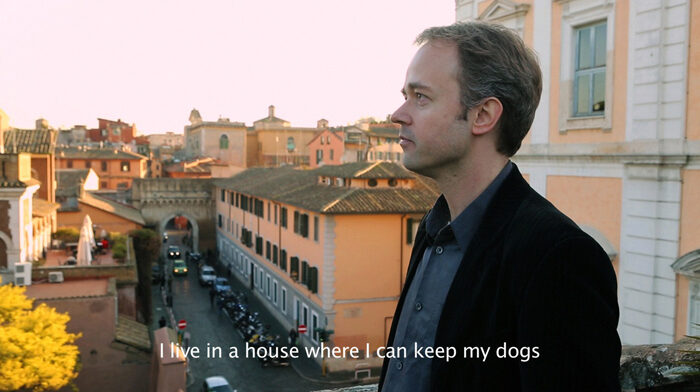
In addition to the the work made for this residency at LSC the exhibition also includes four earlier videos produced between 2011 and 2016, all dealing with communication in a foreign language. They are:
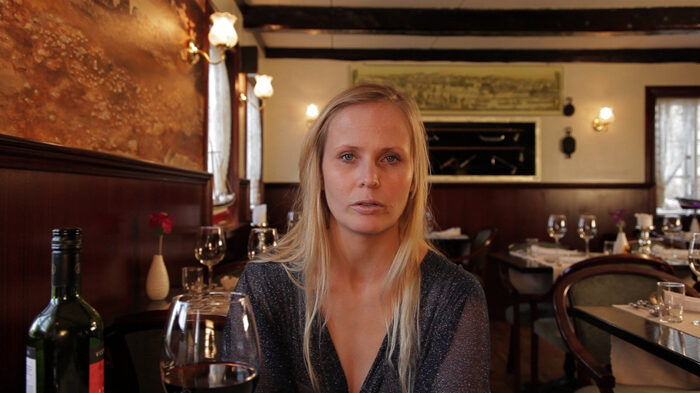
Breiköpp (HD video, 9 minutes, 2011. No. 3): The artist breaks up with his girlfriend in Icelandic, a language he really doesn’t speak very well.
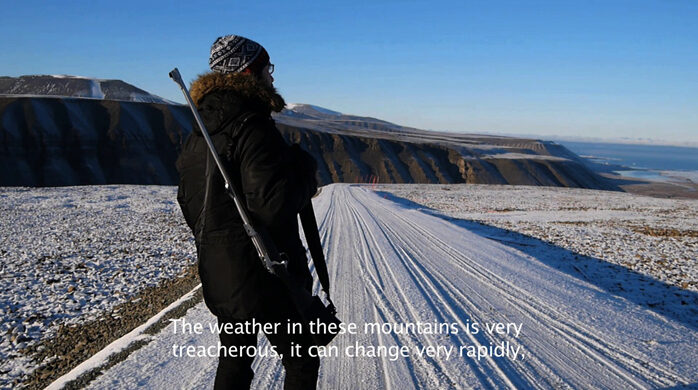
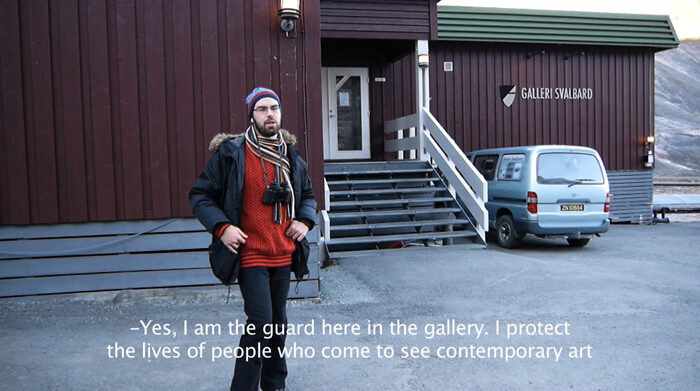
Robota (HD video, 17 minutes, 2013. No. 2), a mockumentary about the northernmost Pole in Norway, Piotr Rudnicki (28), who works as a polar bear guard in the Arctic archipelago of Svalbard.
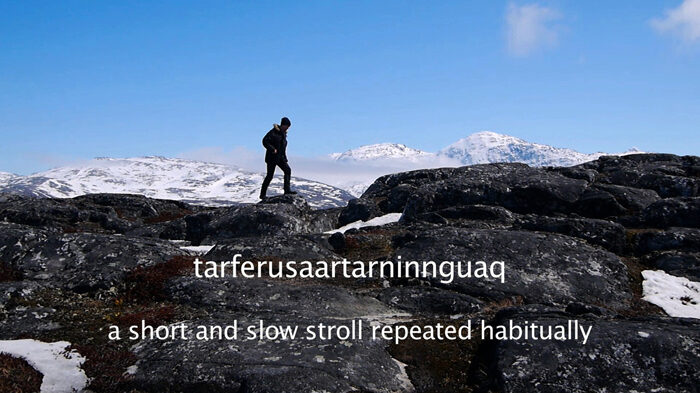
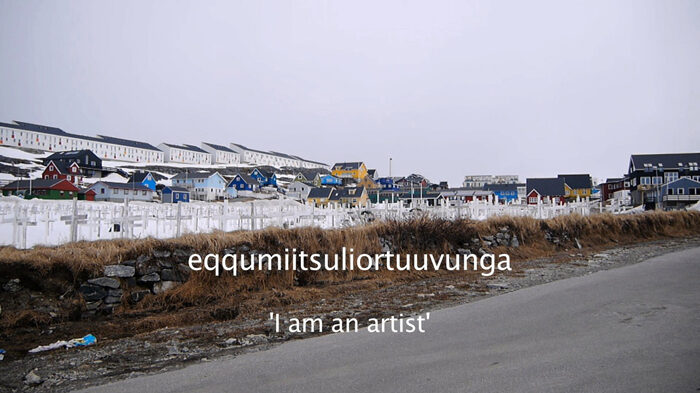
Aporfik (HD video, 17 minutes, 2016. No.1 ) is made in Greenland, and deals with the translation of Norwegian novelist Knut Hamsun’s novel Pan into the Greenlandic language. The novel contains long passages of the main character’s walks in the northern Norwegian landscape, which in its Greenlandic translation goes through a very interesting transformation: On the one hand, the Greenlandic language has no word for ‘forest’, on the other hand, it is a language infinitely richer than Norwegian when it comes to descriptions of nature and descriptions of movement through nature.
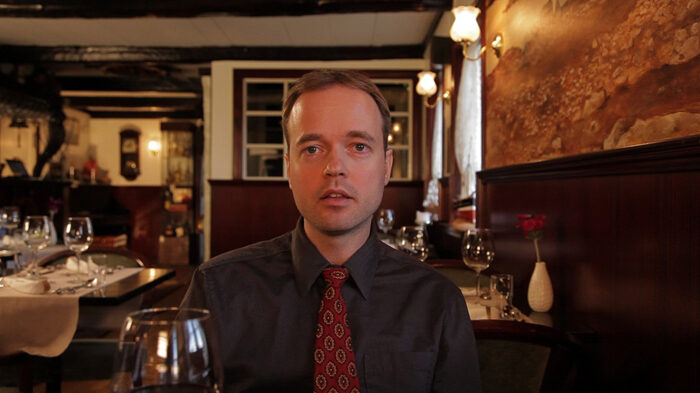
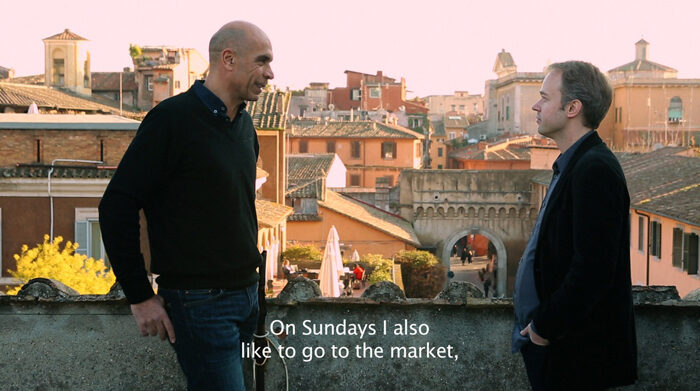
Colloquium (HD video, 17 minutes, 2016. No. 4), filmed in Rome, shows a conversation, in Italian, between the artist and Andrea Nisi, a native Roman. In the film, their conversation has been dubbed into Latin.
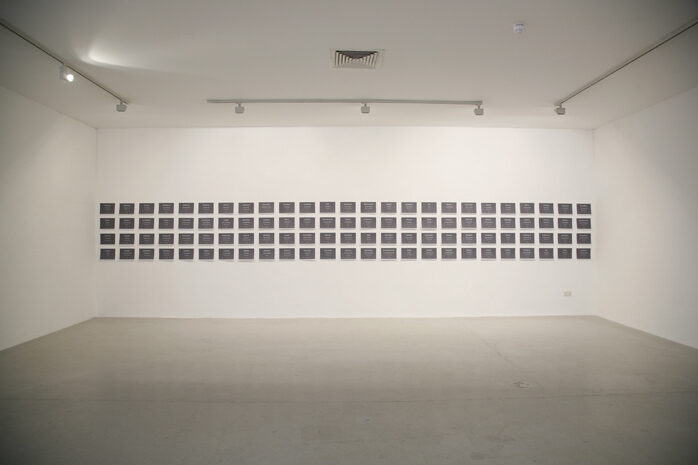
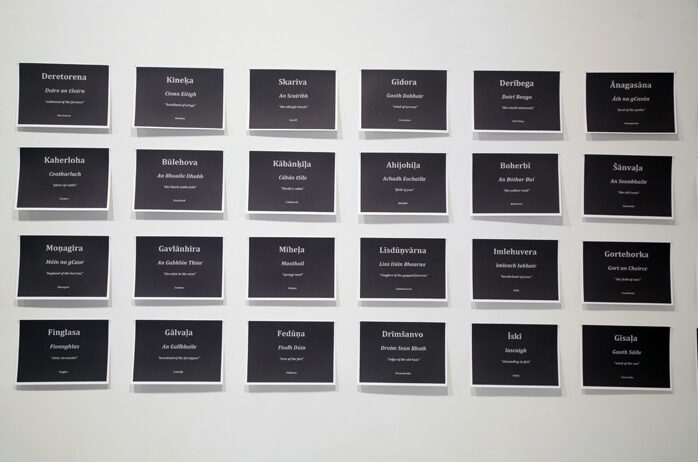
Logainmneacha (installation, 2016, approximately 700 x 100 cm): In the Latvian language, it is mandatory to transcribe all foreign personal names and place names, regardless of how obscure they may be. The names must also correspond with Latvian orthography and grammar. In Latvian, Elton John is Eltons Džons; Gwyneth Paltrow is Gvineta Paltrova. However small, obscure and out-of-the-way a place or village may be, if a Latvian journalist wants to write about something outside Latvia, he or she needs to find a way to transcribe its name. For big cities, there is an established norm: Dublin is ‘Dublina’, Cork is ‘Korka’, Buenos Aires is ‘Buenosairesa’ (sic). The transcriptions of 100 random Irish place names making up this installation piece have been developed in collaboration with Sussex English Solutions, a translation bureau based in Riga, Latvia.
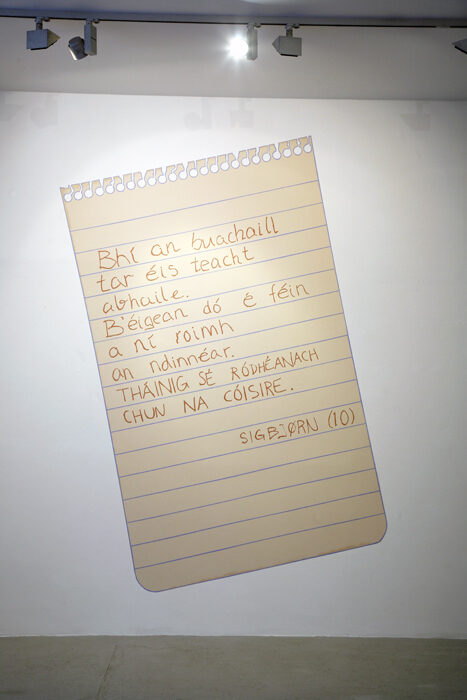
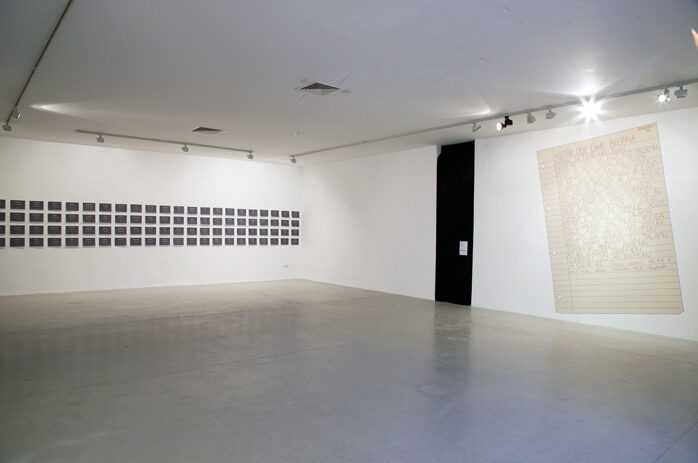
Obair Scoile 1 & 2 (2 wall paintings, emulsion paint, 2016, each approximately 200 x 350 cm): Two large-scale wall paintings each depict a page from a lined notebook, with handwritten text on it. They are both meticulous copies of texts the artist wrote in third grade in school, at the age of nine or ten. The only difference is that on these wall paintings, the text is in Irish, not in Norwegian. To Bratlie, these texts represent his earliest attempts to write fiction, plus they were created at a time when his mother tongue, Norwegian, was not particularly good. As he says, ‘... probably, my literary Norwegian skills were a little bit like my literary Irish skills today'.
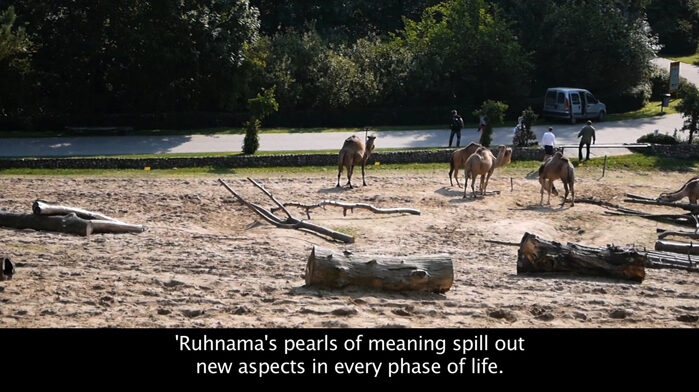
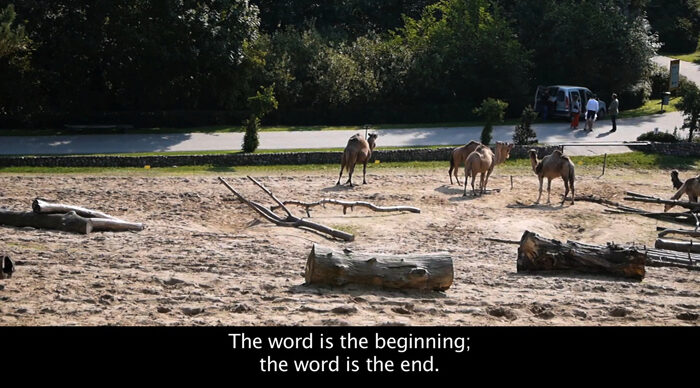
Rúchnáma (HD video, 7 minutes, 2016): ’Ruhnama’ is written by Saparmyrat Türkmenbaşy (1940 - 2006), president of Turkmenistan from 1990 to 2006. It is a book of spiritual and moral guidance, as well as a baffling mishmash of poetry, philosophy, geography and shameless historical fabrication. Since Türkmenbaşy’s reign, although to a somewhat lesser degree since his death, ‘Ruhnama’ has been an integral part of Turkmen society: It has been mandatory reading in all schools and universities. When applying for a job as a civil servant one will be questioned on it, and even asked to quote passages from it. So far, ‘Ruhnama’ has been translated into 41 languages. Irish is not one of these. The 7-minute video piece contains Bratlie’s own translation into Irish of an excerpt from the book, and will later form the basis for an application he intends to write to the Turkmenistani government, for financial support to translate the book in its entirety into Irish, and subsequently to have it published.
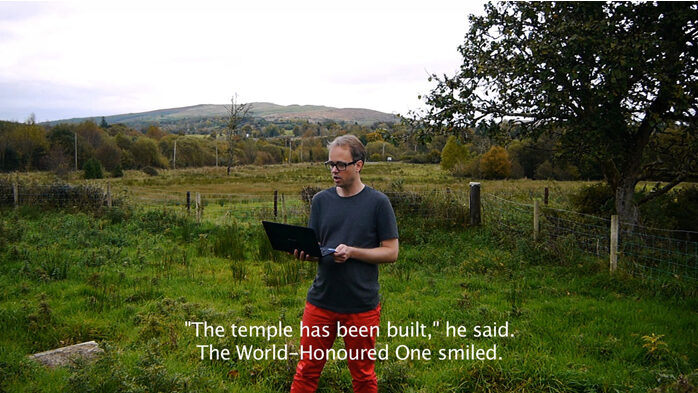
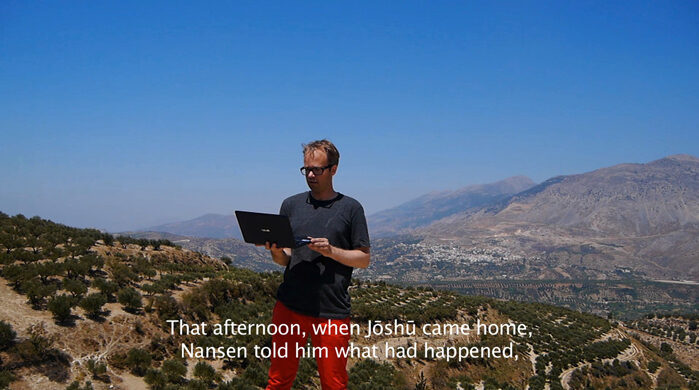
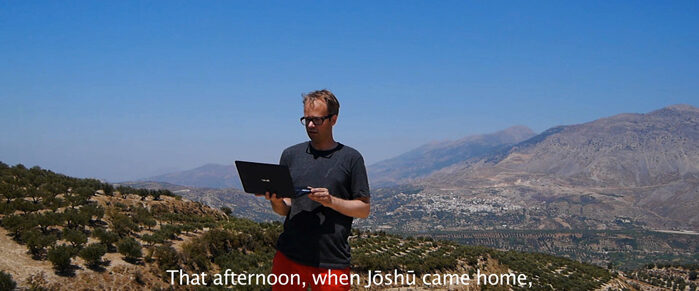
Cóann (HD video, 14 minutes, 2016) is a series of kōans, i.e., questions, dialogues or stories used in Zen Buddhist practice, which originate in 12th century China. For most kōans, any rational or logical interpretation of the story is seen as pointless. The real meaning of a kōan lies outside of language, and can only be grasped intuitively. Bratlie has translated 16 kōans into Irish and the video shows him reading them against the backdrop of different types of landscape; Irish, Greek and Norwegian.
Sigbjørn Bratlie (tháinig ar an saol in Oslo, An Ioruaidh, 1973) oileadh ag Ollscoil Central England in Birmingham agus i gColáiste Ealaíne agus Deartha St. Martins i Londain. Oibríonn sé le físeáin, le hinsuitealláin, le léiriú agus le dathadóireacht agus tá sé ag cleachtadh mar ealaíontóir ón mbliain 2002 anuas. Bunaithe ar thionscnamh a bhí a chleachtas ealaíne cuid mhaith agus d'oibrigh sé as féin agus in éineacht le meithleacha éagsúla ealaíne sna tíortha Bailt is i gCríocha Lochlann, sa Pholainn, sa Ghearmáin agus i Sasana. Léiríodh a shaothar i dtaispeántais aonair ar fud na hIoruaidhe, agus in Helsinki, i gCopenhagen, i nGdansk agus i mBeirlin. Tá foshníomh coincheapúil agus scagúil á chleachtadh aige agus bíonn an greann ina lár. Bíonn cur chuige an léirmhínithe i leith an fhíschultúir chomhaimseartha le brath go furasta ina shaothar mar a gcuirtear lorg na haon chéille i gcodarsna le, agus mar dhúshlán i gcoinne, tuiscint an ilchultúir.