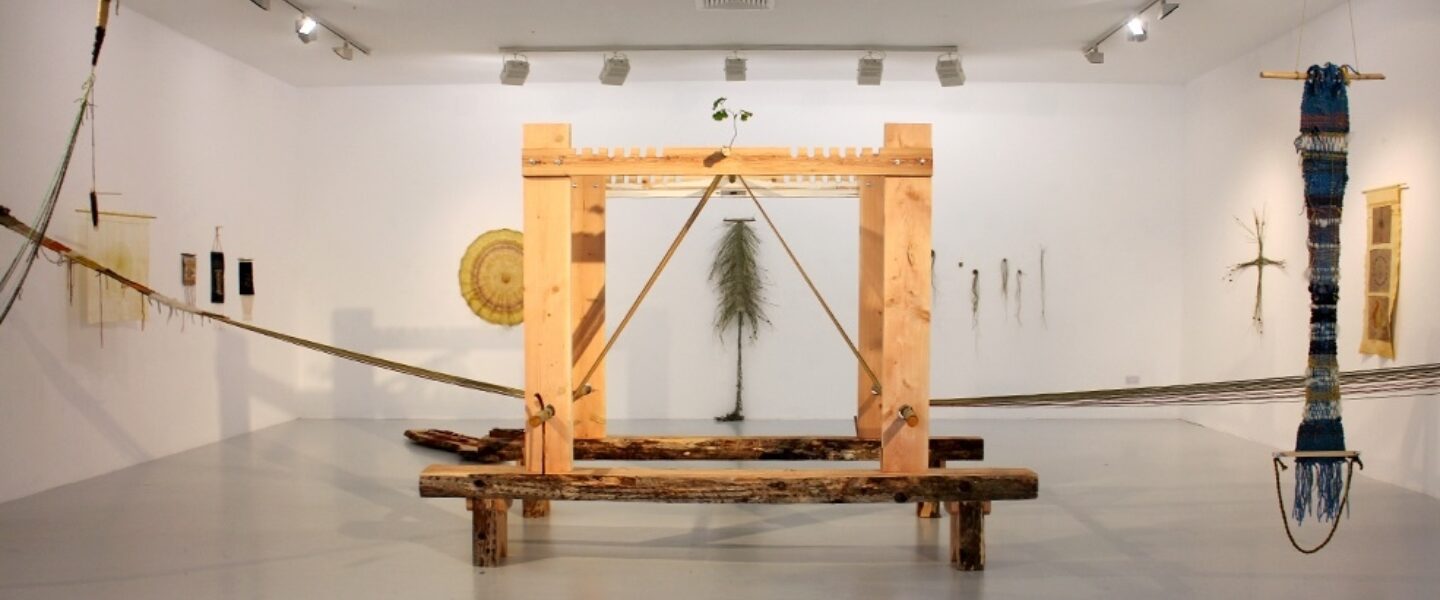
Exhibition period 10/10/25 - 8/11/25
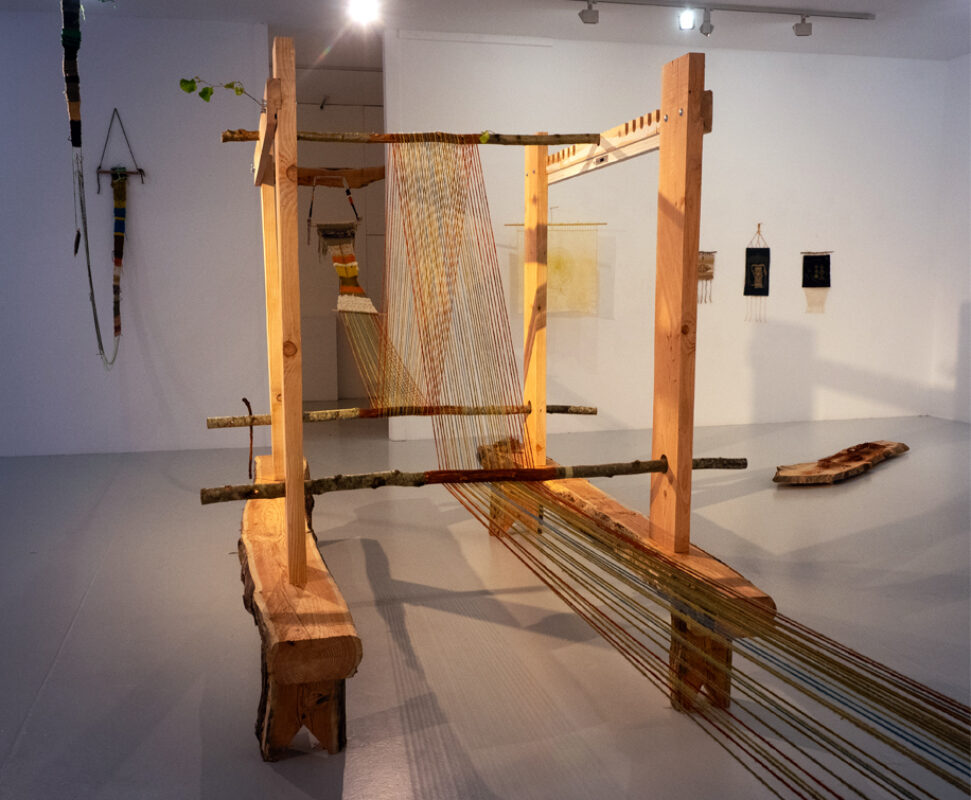
The act of arranging the long parallel lines of the warp is known as snáth a dheilbhiú, which translates as sculpting thread...(Fite Fuaite: Insights into Irish words for Weaving” by Manchán Magan RIP, on craft.ie)
When does warping become weaving? How does spinning become sculpting? Can a thread shape togetherness?
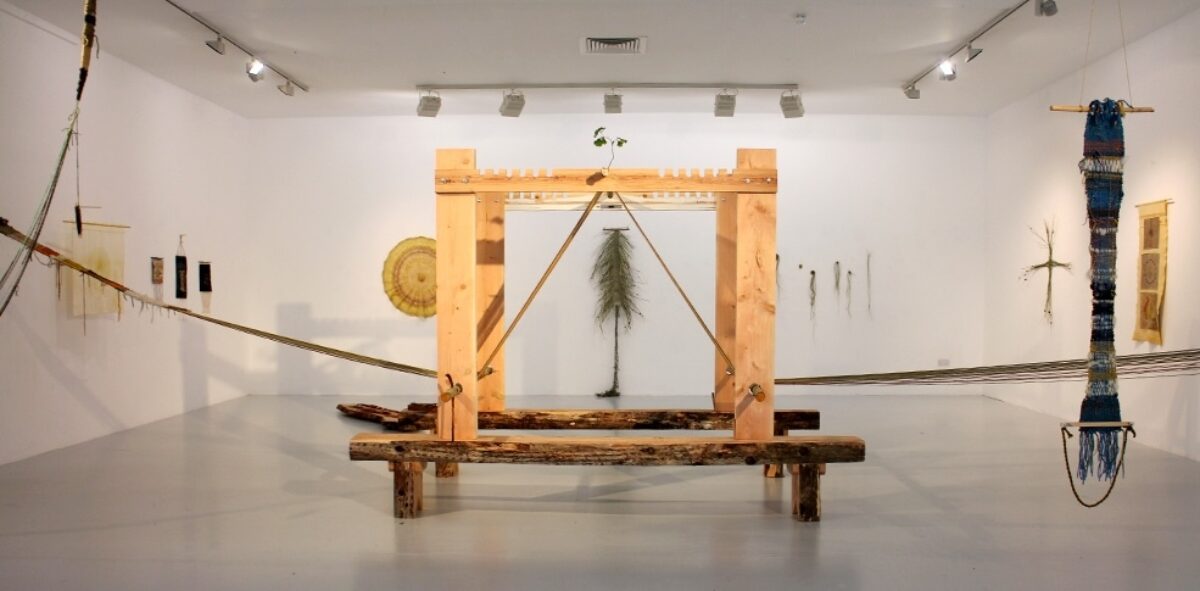
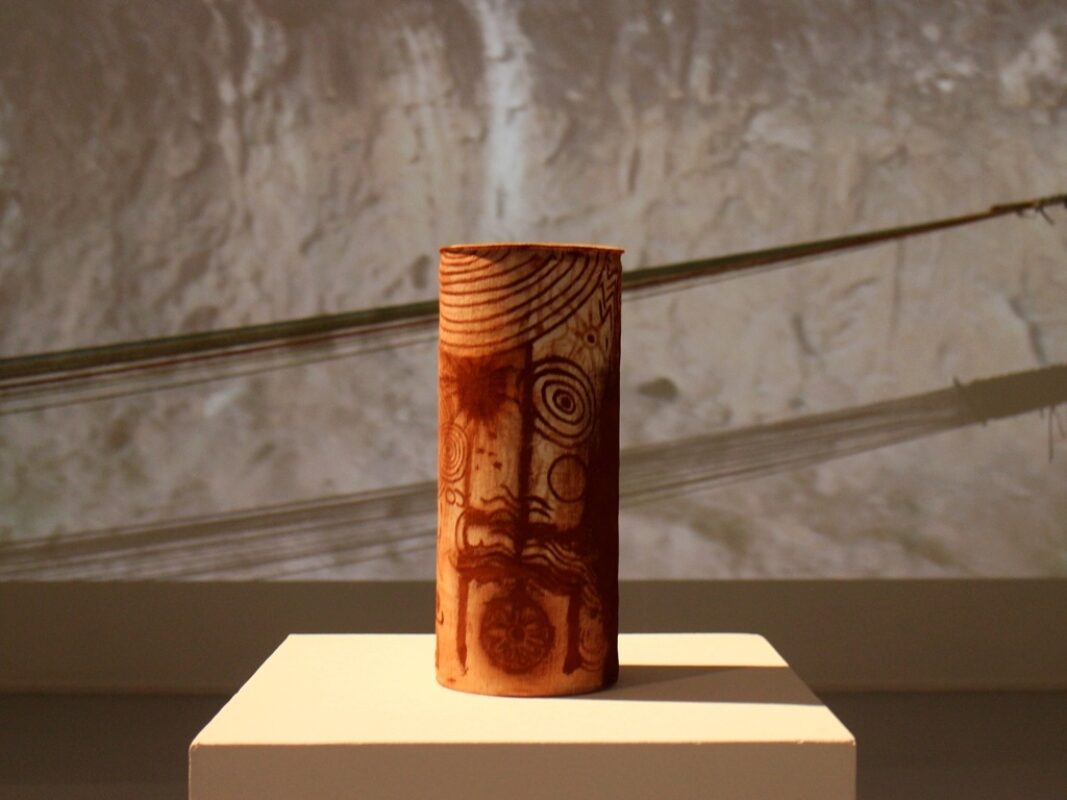
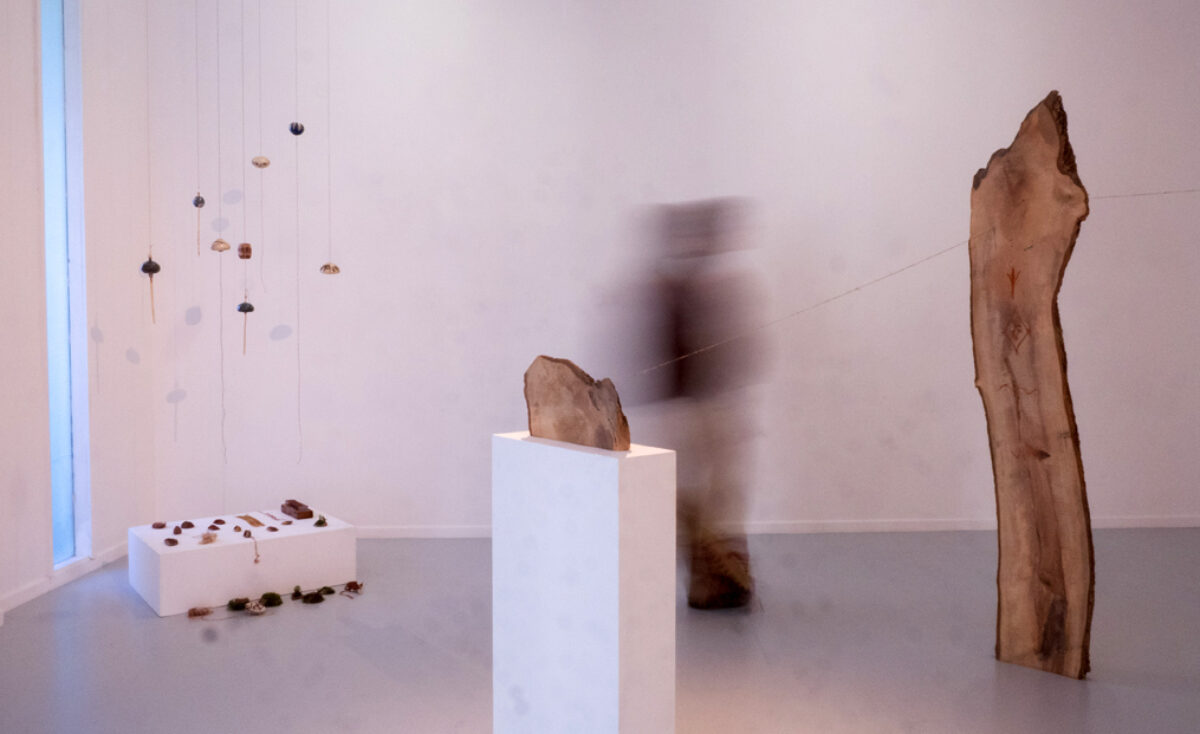
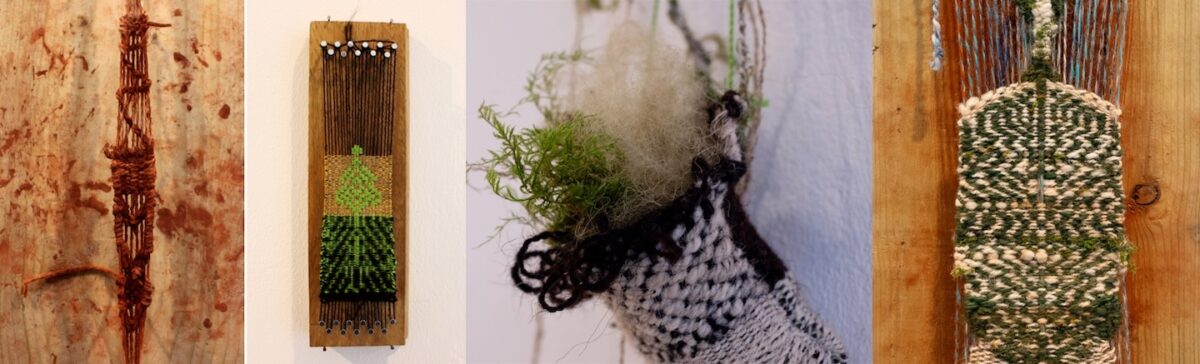
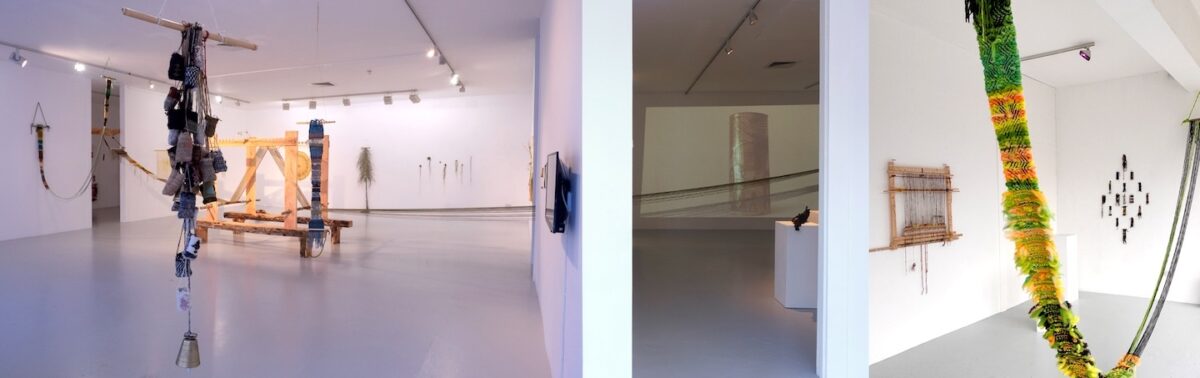
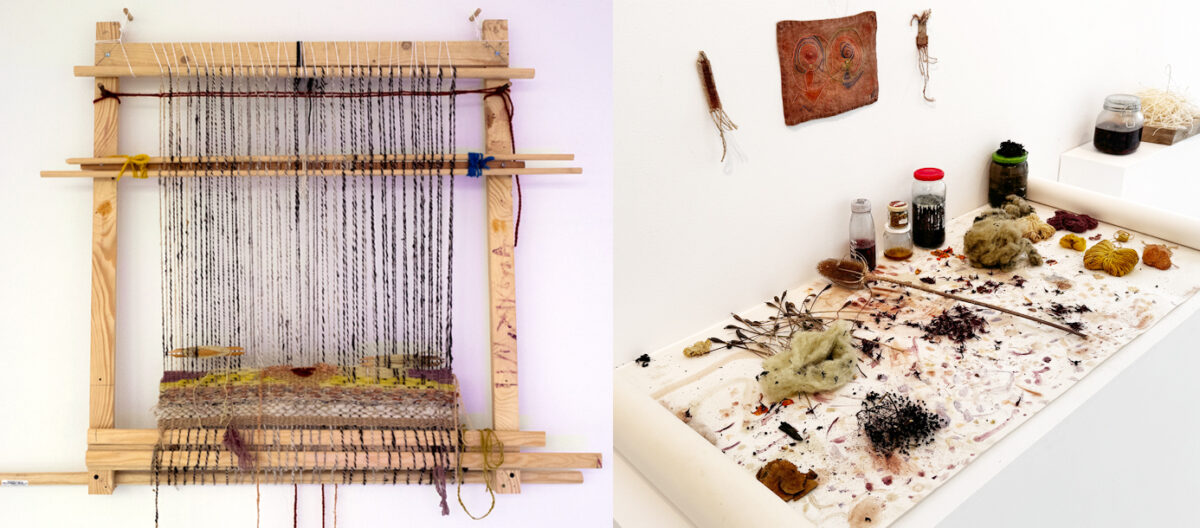
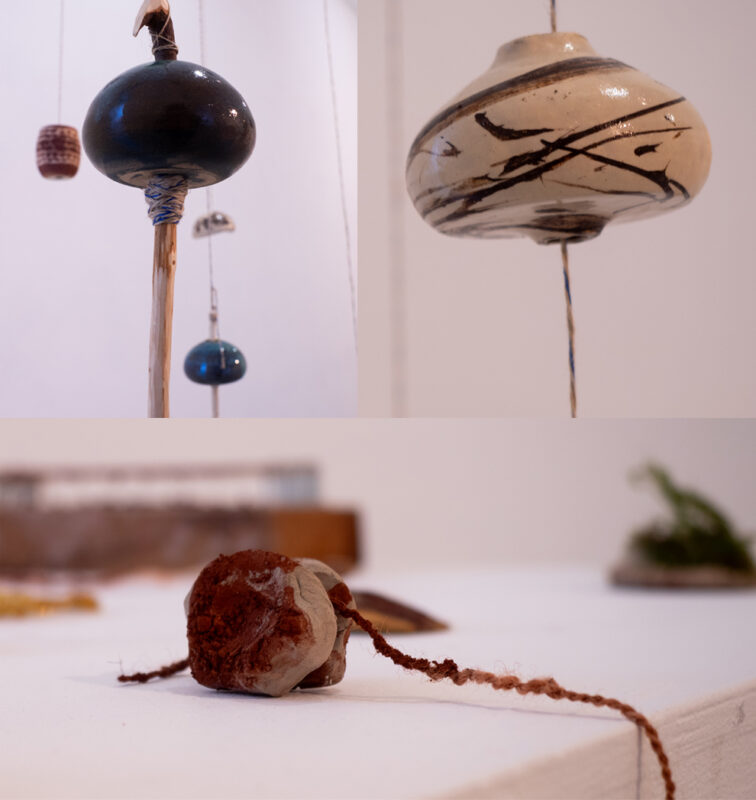
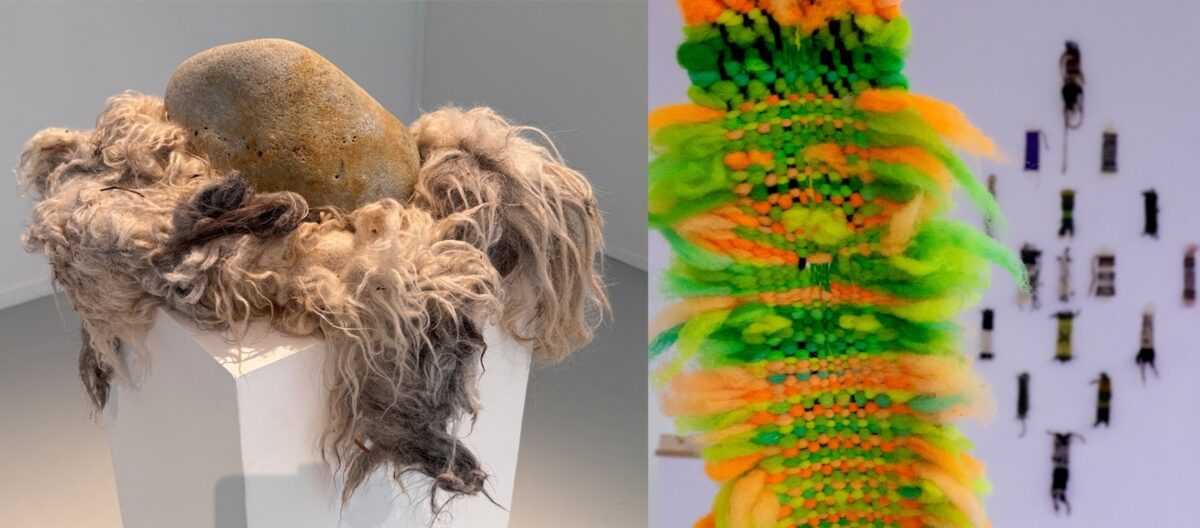
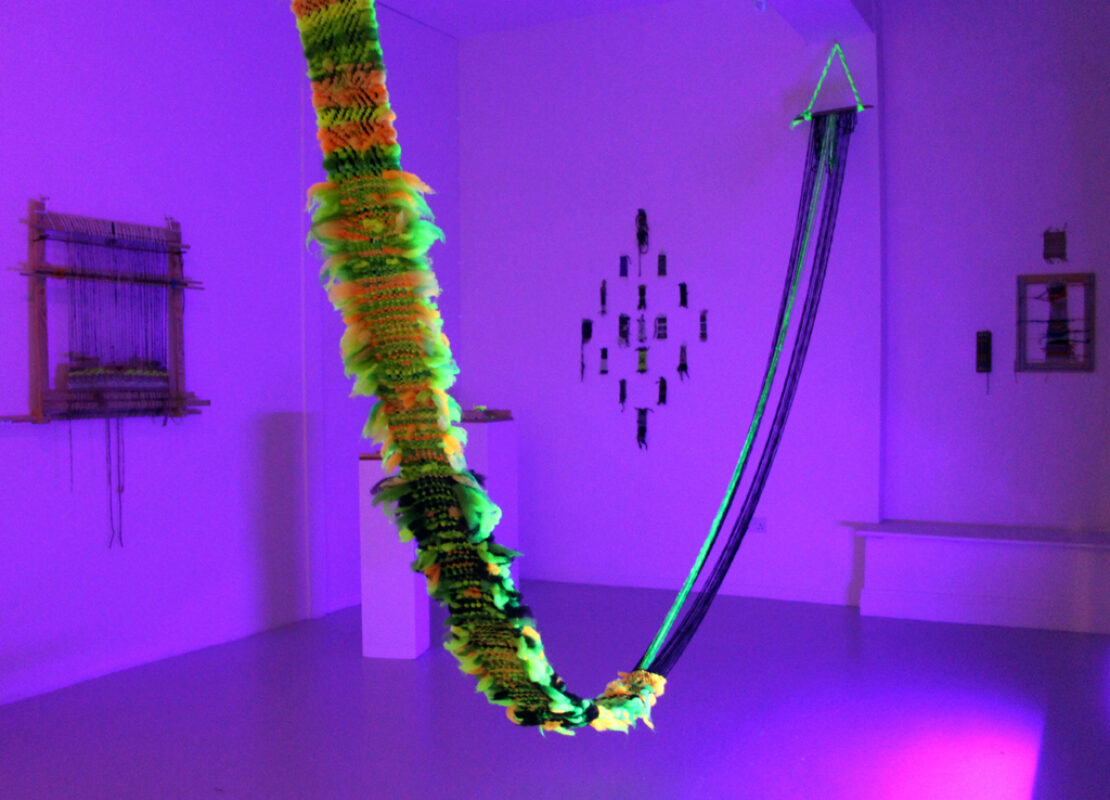
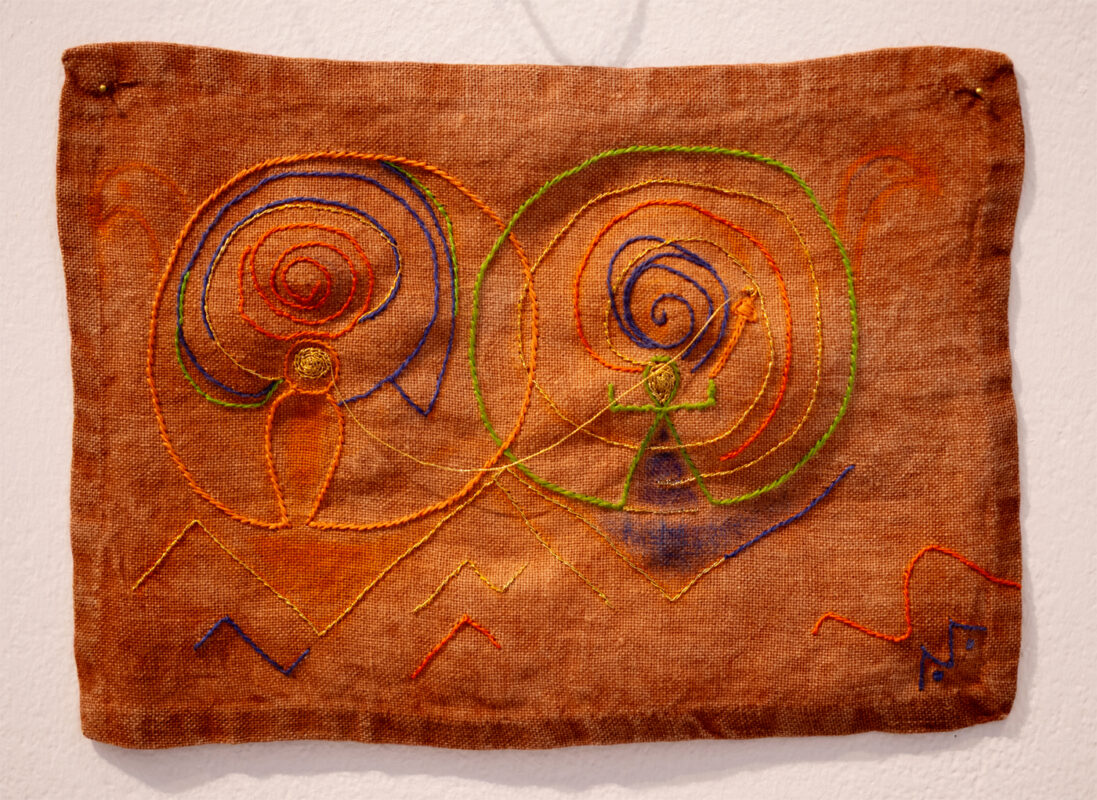
We arrived in Cluainin with very little in the way of works that could fill a space like the Leitrim Sculpture Centre, much less an exhibition by just one artist, or in our case, two. With only a small pack of our tools and instruments, some wools and colours from Sardinia, an island in Italy where we live and learn the art of weaving from our Maestro (who also gifted us a long roll of hand-woven cloth before leaving), along with a small collection of our past tapestries and our drop spindles, we began creating what you now see here — a show we call 'Meitheal', or The Social Fabric.
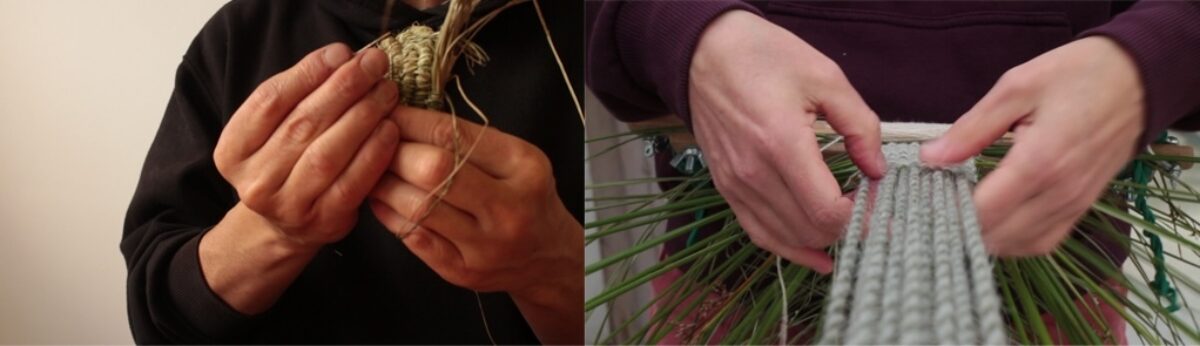
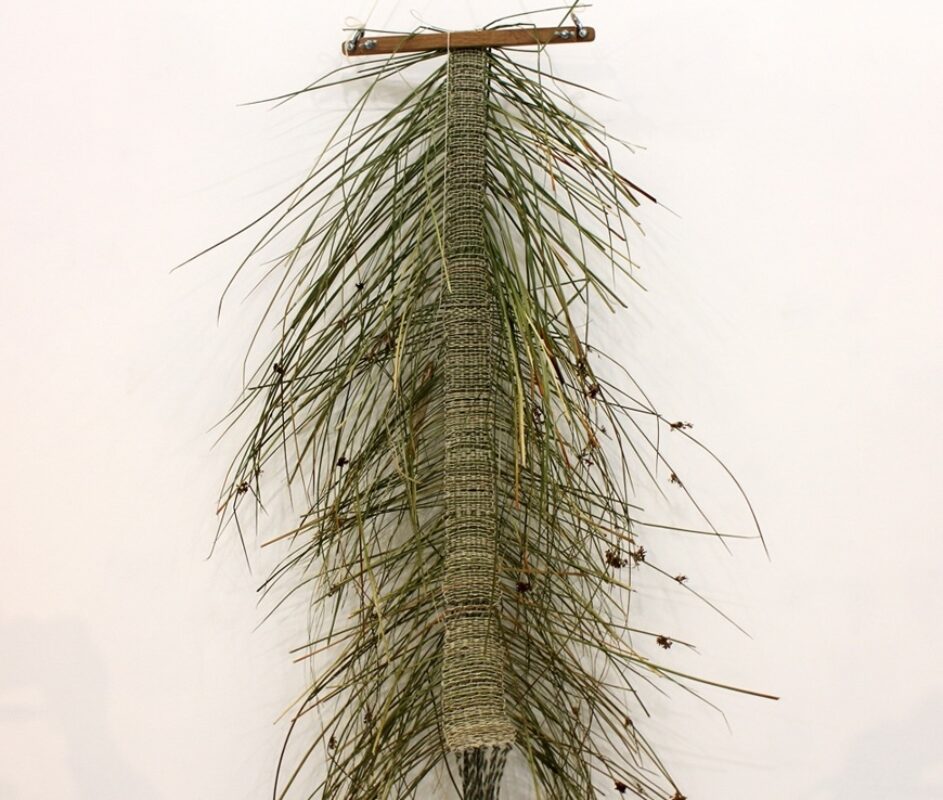
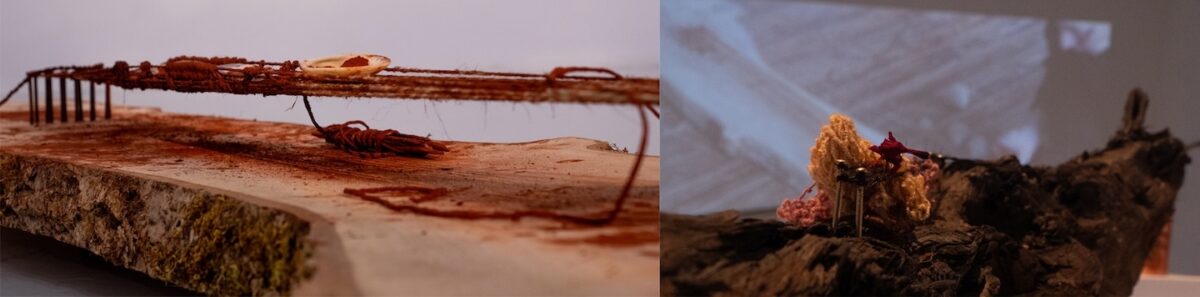
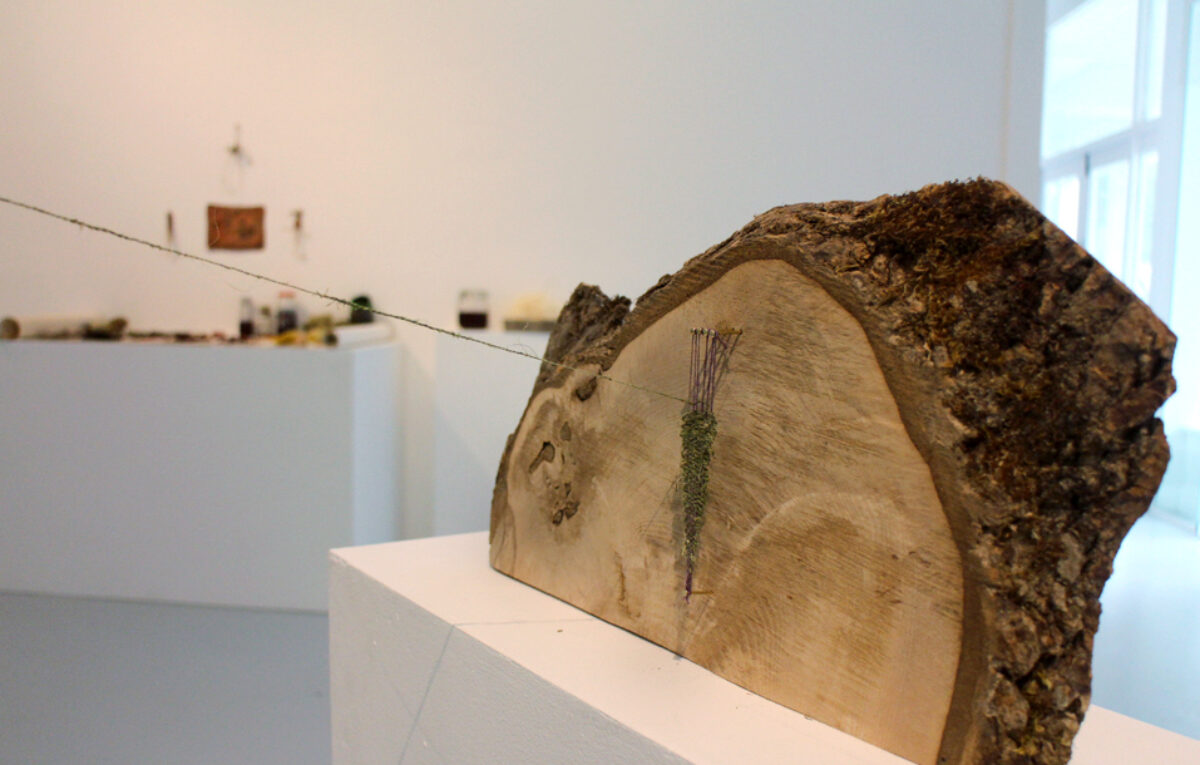
Through a gradual process of sharing and exchange, we came to know this place—its rhythms, winds (and rain!), its people, stories, and memories. Gradually, we began gathering what we needed to start working: rushes from a small patch by the Greenway, blackberries for dyes, mosses from walks in the woods, plastic twine from local shops. Despite the many sheep in the area, it was difficult to find the material we primarily rely on—clean, quality wool.
By the by, we started to receive generous gifts, offers of other things we needed or local matters that caught our interest: ochre, ash and flax, hazel and nettles, tales and myths, a tiny bone spindle, a needle from the past, carding brushes, noteworthy books, the loan of a lovely spinning wheel from Sligo, and, eventually, many kinds of local wools too. In this way, we began to explore the full and lived meaning of the Irish word that first inspired us.
When we first encountered the term ‘Meitheal’, we were struck by its capacity to summarise a sense of collective labour, sharing in hard but necessary work and to embody this in a way that also embraced compassion, solidarity, and mutual support. It reminded us immediately of what weaving means to us — not a means to an end but a space of togetherness, ancestral gestures, a way of becoming entangled in nature, landscape, seasons and time.
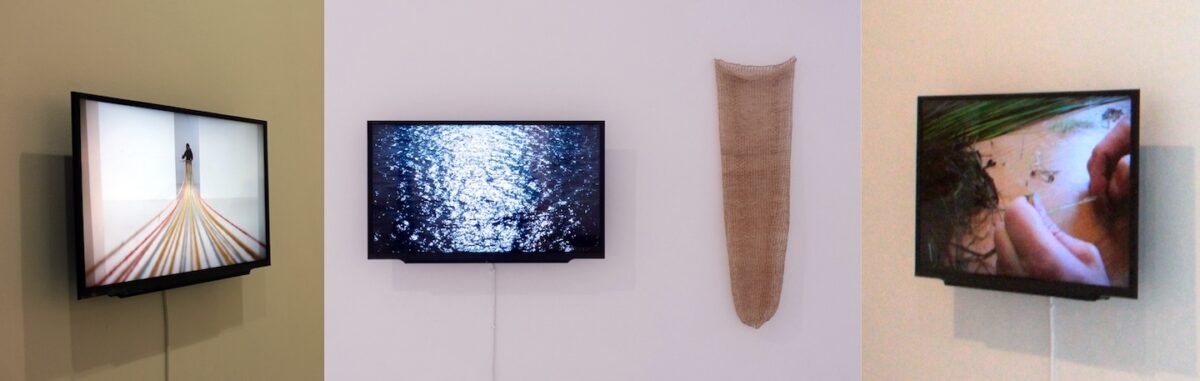
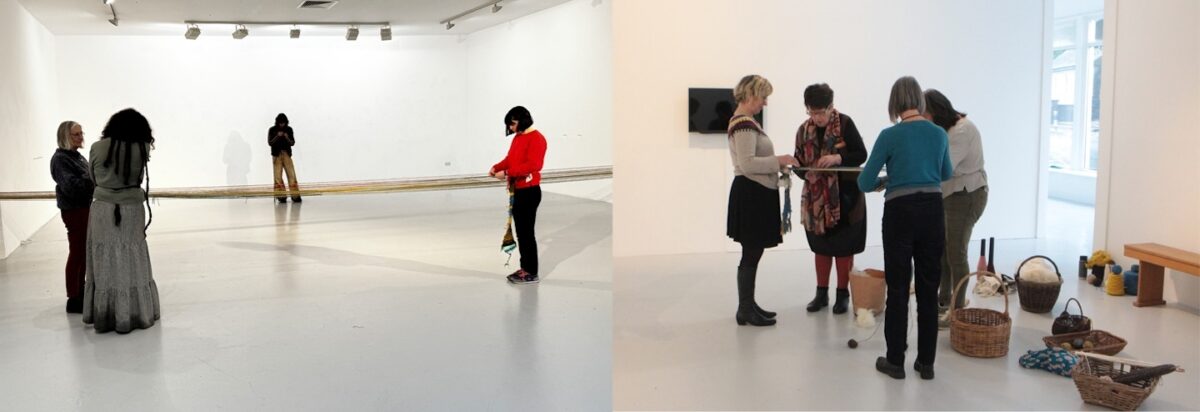
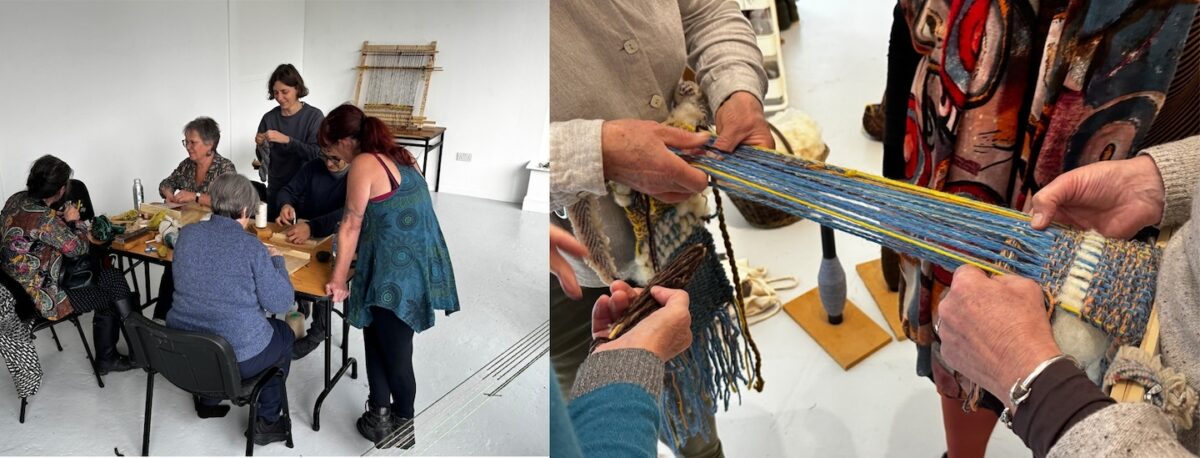
And so, from all this, a blend of social fabrics, living tapestries, and new loom forms has grown, both large and small. All this has been made possible thanks to different collaborative efforts. From the incredible skills and resources of the Centre, its staff, visiting artists and local residents to the inputs of different groups and individuals we have met — a learned archaeologist (and great story teller), a wild ochre gatherer, builders of woolly trails, spinners of woollen threads and new weavers who joined our workshops or visited our project space, and, of course, the constant passing of work and working between and with each other. From these many hands has emerged the rhythmic dance and resonant visions that we now share with you as a kind of ‘snáth a dheilbhiú’ — warping and spinning, weaving and celebrating making and togetherness.
Curated by Sean O'Reilly.
Karl Logge & Marta Romani
Originally from Sydney in Australia and Brescia in Northern Italy, Marta Romani and Karl Logge live and work on the island of Sant’Antioco in Sardinia, Italy. Through projects that span multi-modal forms of artistic production, they specialise in creating alchemic forms, community-driven processes, participatory platforms, and co-creative exchanges that utilise their combined presence to enact and embody different ways of knowing and unknowing. By transforming elemental materials, natural fibres, found sounds, abstract visions, symbolic language, and everyday objects, they adopt a socially engaged approach to weaving, spinning, and rewilding that reconnects us to landscapes, cultural memory, and alternative modes of becoming.
They have produced work for the Cittadellarte Fondazione Pistoletto, UNIDEE, Museum of Contemporary Art Sydney, Auckland Triennial, CRACK Festival, Boom Festival, the IMMA Earth Rising Festival, Makers United, and the New European Bauhaus, and have undertaken rural and regional residencies across Italy, Serbia, Lithuania, Australia, Ireland and Japan.